 ultimate-guide
Sewer Camera Inspection Cost: What to Expect
Table of Contents
- What Is a Sewer Camera Inspection?
- Sewer Line Inspection Cost: Factors That Affect Your Quote
- Sewer Camera Inspection Duration and Process Timeline
- What to Expect During a Sewer Camera Inspection
- Common Issues a Sewer Camera Reveals
- Why Professional Video Inspection Beats DIY Attempts
- Sewer Camera Inspection for Insurance Claims and Home Sales
- Conclusion
- Frequently Asked Questions
Last Updated: September 28, 2026
What Is a Sewer Camera Inspection?
A sewer camera inspection is a diagnostic procedure that uses a specialized video camera mounted on a flexible push-rod to visually examine the interior of your sewer line and drainage system, and understanding sewer camera inspection cost helps you budget for this essential service. The camera transmits real-time video to a monitor above ground, allowing a trained technician to identify blockages, cracks, root intrusion, and other pipe damage without excavation. This technology has become the standard diagnostic tool for homeowners and professionals because it pinpoints problems with precision while preserving your landscape and foundation.
The inspection process captures video footage that serves as documentation for insurance claims, home sales, and repair planning. Rather than guessing where a problem exists or tearing up your yard to investigate, a sewer camera inspection provides clear visual evidence of what's happening inside your pipes.
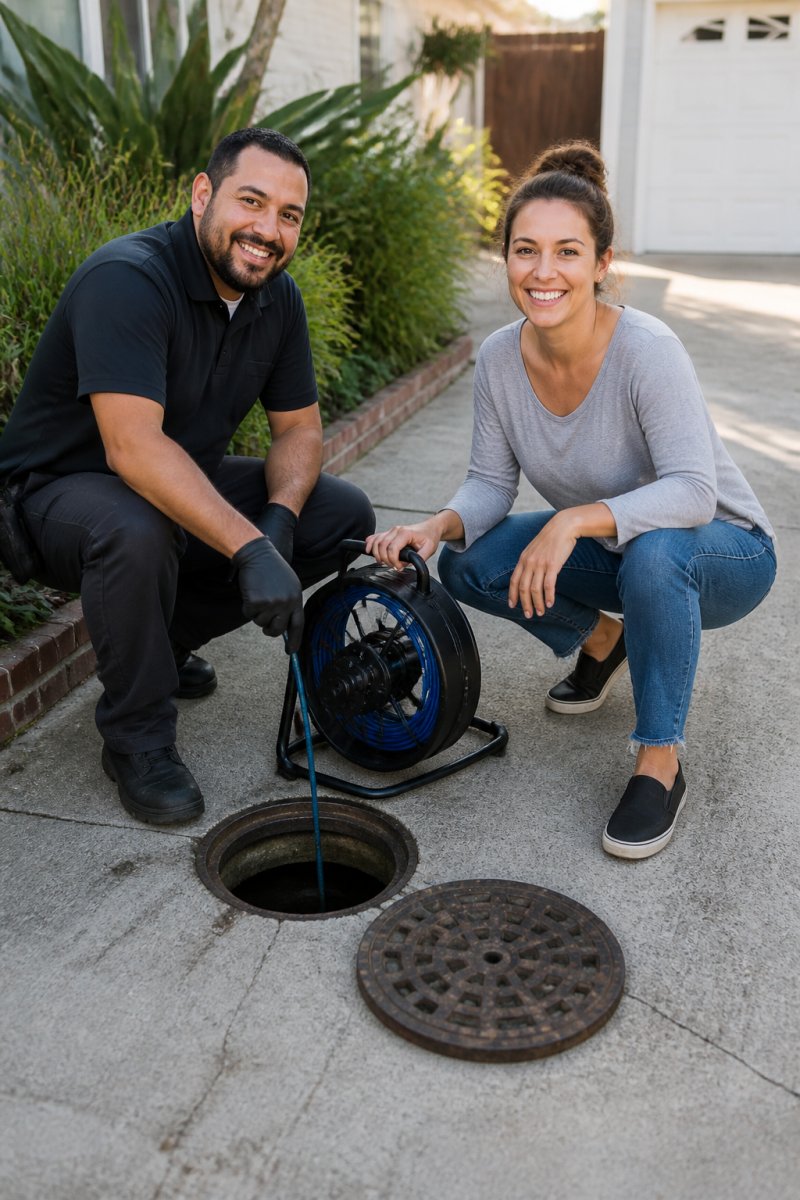
A technician accesses your sewer line through an existing cleanout access point (typically near your home's foundation or in the yard) and feeds the camera-equipped cable into the line. The technician monitors the live feed and uses a locating transmitter to track the cable's position above ground, noting the location and nature of any issues.
Sewer Line Inspection Cost: Factors That Affect Your Quote
Several variables influence the sewer camera inspection cost you'll pay for this diagnostic service. Understanding these factors helps you evaluate quotes and avoid surprise charges when the work begins.
Access point availability is the single biggest cost driver and often the most misunderstood. Your sewer lateral connects to the municipal line through a cleanout, a capped access point typically located near your home's foundation, in the yard, or sometimes in the basement. If this cleanout is easily accessible, visible, and unobstructed, the inspection moves quickly and costs less. If your home lacks a cleanout entirely, or if the existing cleanout is buried, blocked, or inaccessible, the technician must spend significant time and labor locating it or creating temporary access.
When no cleanout exists or it's buried, technicians may route the camera through alternative entry points: a toilet, floor drain, or roof vent stack. These workarounds typically add 30-60 minutes to the inspection and increase costs by 25-50% compared to straightforward cleanout entry.
In rare cases, excavation may be needed to expose the cleanout, escalating costs significantly. Before scheduling, ask your service provider whether your home has an accessible cleanout and where it's located, this detail often determines your quote range.
Sewer line length and complexity matter significantly. A 50-foot lateral takes less time than a 200-foot line with multiple bends. Longer lines and sharp direction changes require slower, more careful navigation to avoid snagging the camera.
Pipe material and condition affect inspection difficulty. Older materials like clay and cast iron require slower work to avoid damage. Pre-existing damage may require pausing to document thoroughly, extending the appointment.
Report depth and documentation influence cost. A basic summary costs less than a detailed report with video file, photos, measurements, and repair recommendations. Insurance claims or home sales require comprehensive reporting with property diagrams and technical analysis.
Time of day and urgency affect pricing. Emergency or after-hours inspections carry premium rates. Regular business hours keep costs lower.
Equipment quality and technology level vary between service providers. Advanced systems with higher-resolution cameras and digital mapping cost more but provide superior documentation. For insurance claims or real estate transactions, higher-end equipment often pays for itself through clearer documentation.
Sewer Camera Inspection Duration and Process Timeline
A typical residential sewer camera inspection takes 1-3 hours, though actual camera time rarely exceeds 30-45 minutes. Duration depends on access difficulty, line length, and report requirements.
Setup and access usually requires 15-30 minutes. The technician locates the cleanout, clears debris, and positions equipment. If no accessible cleanout exists, this phase extends significantly.
Active inspection typically runs 20-45 minutes. The technician feeds the camera at a controlled pace, pausing to document blockages, root intrusion, or structural damage. The locating transmitter tracks cable position above ground.
Post-inspection documentation and cleanup takes 15-30 minutes. The technician reviews footage, marks problem locations, answers questions, and restores the area.
Report generation happens after the technician leaves. A detailed written report with photos, measurements, and repair recommendations typically arrives within 24-48 hours. This delay allows time for the technician to review the footage thoroughly and prepare documentation suitable for insurance companies or real estate transactions.
What to Expect During a Sewer Camera Inspection
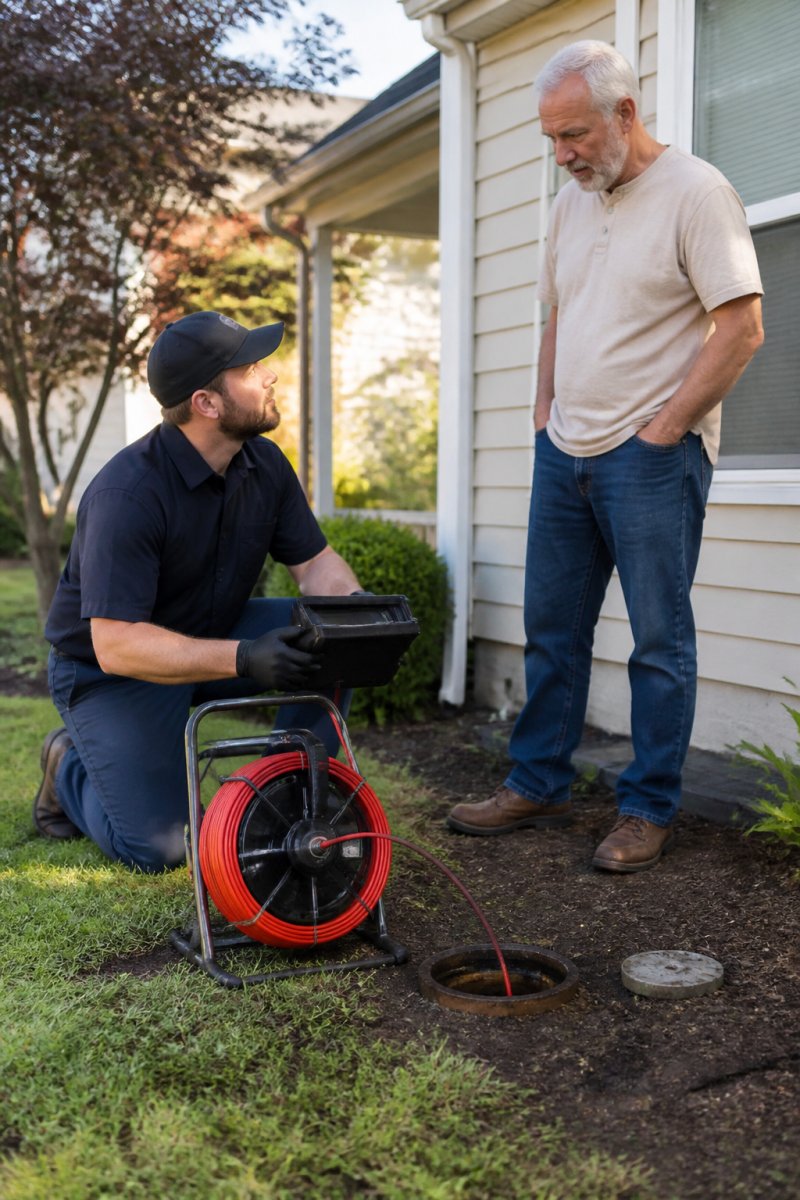
The inspection begins with a walk-through to identify the cleanout access point and visible drainage problems. You'll learn where the camera enters and how far it travels. Ask about access challenges, if the cleanout is buried or blocked, the technician will explain the workaround.
Once access is established, the technician positions the monitor so you can watch the live feed. The technician narrates findings, pointing out pipe material, joint condition, and visible problems.
Healthy pipe sections appear smooth and clear. Problem areas become obvious: tree roots create visible intrusions, cracks show as dark lines or gaps, offset joints appear as steps, blockages appear as obstructions, and grease buildup coats the interior.
The technician uses the locating transmitter to mark problem locations on your property surface. This precision helps with repair planning and provides essential documentation for insurance claims.
The technician explains what each finding means: minor root intrusion may not require immediate action, collapsed sections demand urgent repair, and offset joints might warrant monitoring. This guidance helps you prioritize repairs based on actual risk.
What a Quality Post-Inspection Report Should Include
You should receive a detailed written report within 24-48 hours. A comprehensive report includes:
-
Video file or digital access: The complete video footage from the inspection, either provided on a USB drive, via secure cloud link, or through the service provider's online portal. This allows you to review findings at your own pace and share with contractors or insurance adjusters.
-
Still photographs: High-quality photos extracted from the video showing significant findings, root intrusion, cracks, offset joints, blockages, or deterioration. These images should be labeled with location and description.
-
Property diagram or map: A sketch or marked-up image of your property showing the sewer line route and the exact locations (marked by distance from the cleanout) where problems were found. This is essential for insurance claims and repair planning.
-
Written summary: A narrative description of the pipe condition, materials encountered, and findings. The report should distinguish between minor issues (e.g., minor root intrusion at a single joint) and significant problems (e.g., collapsed section, extensive root intrusion, offset joints causing blockage).
-
Repair recommendations: Professional guidance on which issues require immediate repair, which can be monitored, and which may be addressed during planned maintenance. The report should explain why each recommendation is made.
-
Technician credentials: The technician's name, license number (if applicable in your state), and the service provider's contact information. Insurance companies and real estate professionals require this verification.
-
Inspection date and line length: The date of inspection and the total distance the camera traveled (e.g., "inspected 180 feet of sewer lateral"). This confirms the scope of work performed.
If your service provider offers only a verbal summary or generic one-page report without video, photos, or a property diagram, you lack documentation for insurance claims or real estate transactions. Before scheduling, ask what the report will include.
Common Issues a Sewer Camera Reveals
Root intrusion ranks as the most frequently discovered problem. Tree roots penetrate through joints or cracks, appearing as hair-like strands on video. Minor intrusion may not require immediate action, but extensive growth blocks flow and damages pipe structure.
Pipe cracks and breaks range from hairline fractures to complete separations. Cracks allow groundwater entry or sewage escape.
Why Professional Video Inspection Beats DIY Attempts
A sewer camera inspection requires specialized equipment, training, and experience that DIY approaches cannot replicate. Consumer-grade borescopes and drain cameras lack the cable length, push-rod stiffness, and video quality needed to navigate residential sewer lines effectively. These devices are designed for short runs like sink drains, not the 50-200 foot laterals that connect homes to municipal systems.
Sewer Camera Inspection for Insurance Claims and Home Sales
When you file an insurance claim for water damage or sewage backup, your insurance company requires professional documentation proving the damage source. A sewer camera inspection provides this evidence. The video clearly shows whether the problem originated from your home's plumbing system or from the municipal sewer line, which determines liability and coverage eligibility.
Conclusion
A sewer camera inspection provides the most accurate diagnosis of sewer line and drainage system problems. The procedure is non-invasive, fast, and generates professional documentation suitable for insurance claims, home sales, and repair planning. Understanding the factors that influence inspection costs helps you evaluate quotes and avoid surprises.
Frequently Asked Questions
How long does a sewer camera inspection take?
A typical residential sewer camera inspection takes 1 to 3 hours, depending on the length of your sewer lateral and accessibility. If your cleanout access is easily reachable, the process moves faster. Difficult access points or longer pipe runs extend the timeline. The technician will provide a time estimate before starting.
What factors influence the total cost of a sewer camera inspection?
Several factors affect pricing: the distance from your home to the main sewer line, whether a cleanout access exists (or needs to be created), pipe diameter, suspected problem severity, and local service rates. Equipment quality and technician expertise also matter. Request a detailed quote that breaks down labor, equipment, and access considerations.
Is a sewer camera inspection worth the investment for residential properties?
Yes, especially before purchasing a home, during insurance claims, or when experiencing drainage problems. A video inspection pinpoints issues like root intrusion, collapsed pipes, and offset joints without excavation. The diagnostic clarity prevents costly guesswork and provides documentation for insurance or real estate transactions, making it a smart preventative investment.
Do insurance companies cover the cost of sewer line inspections?
Coverage depends on your homeowner's insurance policy and whether the damage is sudden and accidental. Some insurers cover inspection costs as part of a claim investigation; others do not. A professional sewer camera inspection report strengthens your claim by documenting the exact issue. Contact your insurer before scheduling to clarify coverage and report requirements.
When drainage problems or water damage strikes, you need answers fast. California Leak Detection Specialists performs comprehensive sewer camera inspections with detailed reporting that insurance companies and lenders accept immediately. Our licensed, bonded team provides clear documentation, marked property diagrams, and expert guidance on repair priorities. Call (951) 278-8999 to schedule your inspection and get the accurate diagnosis your home needs.