 Ultimate guide
How to Identify a Slab Leak in Your Home
Last Updated: October 26, 2026
Quick Summary
A slab leak is a water leak in the water supply or drain lines that run beneath your home's concrete foundation. These pipes are embedded in or run under the concrete slab, making them invisible and difficult to access. When a pipe develops a hole or crack, water escapes into the soil beneath your foundation, causing damage that spreads silently over time.
- Warm spots on floors and unexplained water bill increases of 10-30% are early warning signs of a slab leak.
- Pipe corrosion is the leading cause, especially in homes built before the 1990s with copper or galvanized steel pipes.
- Professional detection uses acoustic listening equipment and thermal imaging to locate leaks without tearing up concrete.
- Repair options include spot repair, pipe rerouting, or full repiping depending on the leak's location and pipe age.
- Most homeowners insurance policies do not cover slab leaks caused by normal wear and tear or corrosion.
Table of Contents
- What Is a Slab Leak and Where It Occurs
- Common Slab Leak Causes and Risk Factors
- Warning Signs and Slab Leak Symptoms to Watch For
- How Slab Leak Detection Works
- Slab Leak Repair Options and What to Expect
- Slab Leak and Homeowners Insurance Coverage
- Your Next Step: Professional Inspection and Documentation
- Frequently Asked Questions
What Is a Slab Leak and Where It Occurs
A slab leak is a water leak in the water supply or drain lines that run beneath your home's concrete foundation. These pipes are embedded in or run under the concrete slab, making them invisible and difficult to access.
Most residential homes built on concrete slabs, common in many regions, have water lines running horizontally through the foundation. Both hot and cold water supply lines can develop leaks, as can drain lines.
What makes a slab leak particularly serious is that homeowners often don't realize it's happening until significant damage has already occurred. The leak happens out of sight, beneath solid concrete, which means early detection requires professional equipment and expertise.
The concrete slab itself sits on soil and gravel. When water leaks from pipes beneath it, that water saturates the soil, weakening the foundation's support.
Common Slab Leak Causes and Risk Factors
Several factors increase the likelihood of developing a slab leak. Understanding these causes helps homeowners recognize their risk level and take preventive steps.
Pipe corrosion is the leading cause, especially in homes built before the 1990s.
Water pressure that's too high stresses pipes continuously. Most homes should operate between 40 and 80 pounds per square inch (PSI).
Soil movement and ground settling put mechanical stress on pipes.
Abrasion occurs when pipes rub against concrete, rocks, or other hard materials during ground settling.
Chemical corrosion from aggressive soil or water chemistry attacks pipe material.
Age of the home is a straightforward risk factor. Homes built in the 1970s and 1980s have pipes that are now 40+ years old.
Several factors increase the likelihood of developing a slab leak, each with distinct causes and effects on your pipes.
| Cause | Pipe Types Affected | Effect on Pipes |
|---|---|---|
| Pipe corrosion | Copper, galvanized steel | Pinhole leaks, rust, inside-out deterioration |
| High water pressure | All types | Accelerated wear on joints and walls |
| Soil movement and settling | All types | Cracks, separated connections |
| Abrasion | All types | Friction wear through pipe wall |
| Chemical corrosion | Copper, steel | Aggressive soil or water chemistry attacks |
| Pipe age | Copper, steel | 40+ years old, approaching 50-70 year lifespan |
Warning Signs and Slab Leak Symptoms to Watch For
Detecting a slab leak early requires paying attention to subtle changes in your home. Most homeowners don't realize they have a problem until multiple warning signs appear together. Here's what to watch for:
Warm or damp spots on floors
One of the earliest and most telling signs of a slab leak is a warm patch on your floor, particularly in areas where hot water lines run.
Damp spots or discoloration on floors also indicate water escaping from pipes. The concrete absorbs moisture, and that moisture can wick upward to the surface.
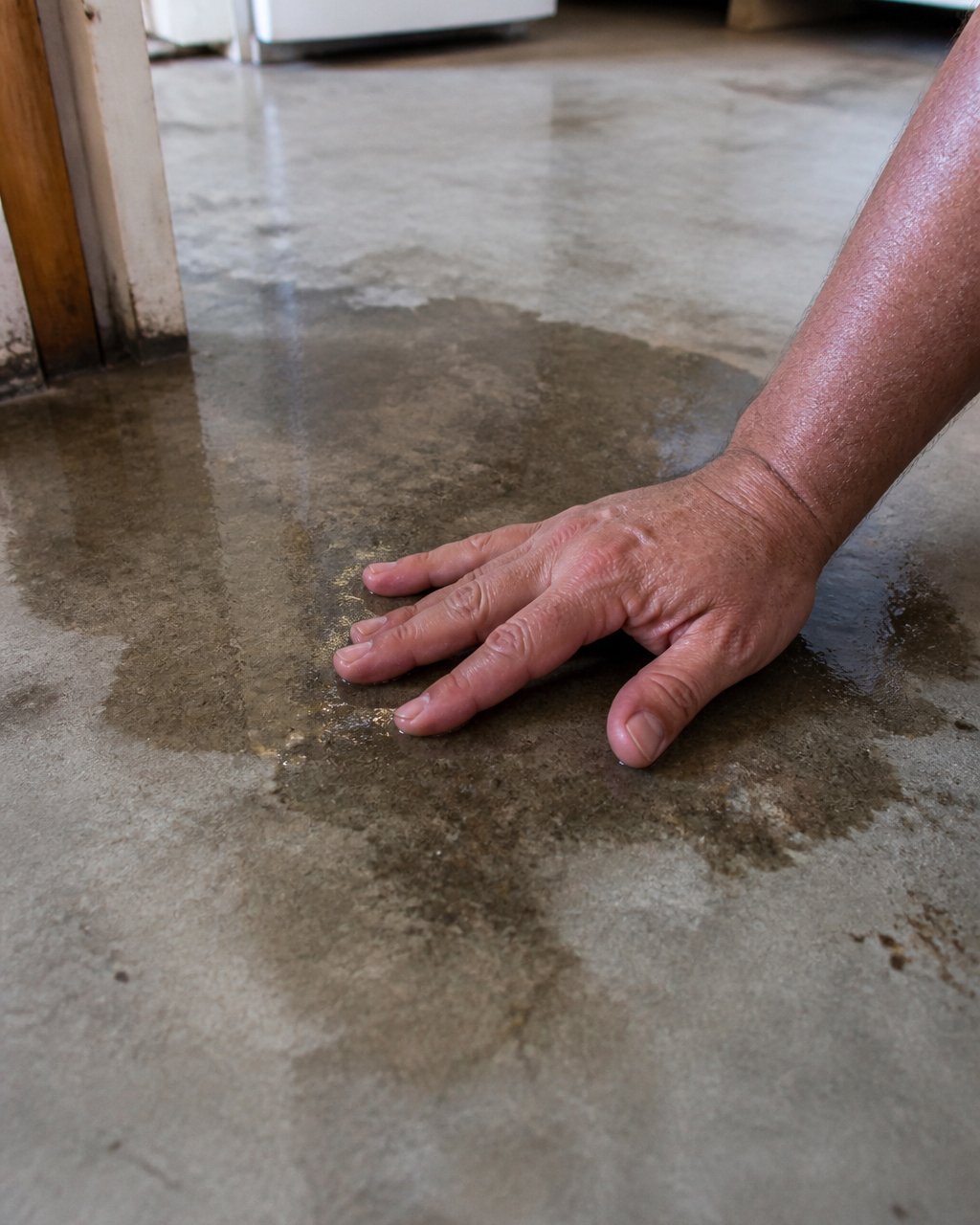
Walk barefoot across your home periodically. Your feet are sensitive to temperature changes and can detect warm spots before they're obvious to the eye. Pay special attention to hallways, bathrooms, and kitchen areas where water lines typically run.
Unexplained increases in water bills
Your water bill is one of the most reliable indicators of a hidden leak. If your bill jumps 10-30% without any change in your household's water usage, a slab leak is a likely culprit. This sign often appears before you notice physical evidence of the leak.
Compare your current bill to the same month last year. Account for seasonal changes, summer bills are typically higher due to outdoor watering, but look for unexplained spikes. If your bill has climbed steadily over several months, that pattern suggests a slow leak that's gradually worsening.
Some homeowners don't notice the increase immediately because water bills can fluctuate. However, a sustained elevation over multiple billing cycles warrants investigation. The longer a slab leak goes undetected, the more water escapes and the higher your bill climbs.
Sounds of running water when no fixtures are in use
Listen carefully in quiet moments. If you hear the sound of running water, flowing water, or water movement when no one is using taps, showers, or appliances, a leak is likely present. This sound might be faint, a soft hissing or rushing noise, or more pronounced depending on the leak's size and pressure.
Check your home at night when it's quiet and all water-using appliances are off. Stand near walls where you know water lines run. If you consistently hear water sounds with no obvious source, that's a strong sign of a pressurized leak in your plumbing system.
Low water pressure throughout the home
A slab leak reduces water pressure by allowing pressurized water to escape before it reaches your fixtures. If pressure drops gradually across your entire home, not just at one fixture, a leak in the main supply line is likely responsible. You might notice weak shower flow, slow-filling bathtubs, or reduced pressure at multiple sinks simultaneously.
Pressure loss at a single fixture usually indicates a local problem at that fixture. But if pressure is consistently low everywhere, the issue is upstream, in the main water line. This symptom often appears alongside other warning signs like high water bills or warm floors.
How Slab Leak Detection Works
Professional slab leak detection uses specialized equipment to locate leaks without tearing up your concrete. These non-destructive methods pinpoint the exact location of the leak, allowing for targeted repairs. Understanding how detection works helps you know what to expect when you call a professional.
Acoustic listening equipment
Acoustic listening technology detects the sound of water escaping under pressure. When water leaks from a pressurized line, it creates vibrations and noise as it hits soil and concrete. Specialized microphones and listening devices pick up these sounds, which technicians use to trace the leak's location.
A technician places acoustic sensors on the floor and walls, moving systematically across the home. The equipment amplifies the sound of escaping water, making it audible through headphones.
This method works best for active leaks in pressurized supply lines. It's non-invasive and requires no digging, making it ideal for initial leak location. You can learn more about how slab leak detection works to understand the full range of non-destructive techniques available.
Thermal imaging and pressure testing
Thermal imaging cameras detect temperature differences in your floor and walls. Leaking hot water creates warm zones that show up clearly on a thermal image. A technician scans your home's floors and walls, looking for these anomalies. Thermal imaging is particularly effective for locating hot water line leaks.
Pressure testing involves isolating sections of your plumbing and monitoring pressure changes over time. If pressure drops in an isolated section when no water is being used, a leak exists in that section. This method narrows down the leak's location to a specific area of pipe, complementing acoustic and thermal findings.
Together, these methods allow professionals to identify the leak's exact location with minimal disruption to your home. Understanding the cost of professional slab leak detection services helps you budget for this essential diagnostic step.
Slab Leak Repair Options and What to Expect
Once a slab leak is confirmed, you have several repair options. Each approach involves different levels of disruption, cost, and long-term durability.
Spot repair targets the specific leak location. A contractor cuts a small opening in the concrete directly above the leak, repairs or replaces the damaged section of pipe, and patches the concrete.
Pipe rerouting runs new pipe above the slab, bypassing the leaking section entirely.
Full repiping replaces all water supply lines in your home. This is the most comprehensive approach, ideal for homes with multiple leaks or extensively corroded pipes.
Each repair method has trade-offs. Spot repair is quick and affordable but may not address underlying pipe deterioration. Rerouting is more involved but provides reliable long-term results.
Slab Leak and Homeowners Insurance Coverage
Whether homeowners insurance covers a slab leak depends on your policy and the leak's cause. Understanding your coverage before you need it helps you plan for potential costs and file claims correctly.
Most standard homeowners insurance policies do not cover slab leaks caused by normal wear and tear, aging pipes, or corrosion. These are considered maintenance issues, and insurers typically classify them as the homeowner's responsibility.
The distinction matters. A pinhole leak that develops slowly over years due to corrosion is generally not covered.
Water damage caused by a slab leak may be covered if the leak itself qualifies.
The best approach is to review your policy or contact your insurance agent directly. Learn more about whether homeowners insurance covers slab leaks to understand your specific coverage options.
Your Next Step: Professional Inspection and Documentation
If you suspect a slab leak, the first step is professional inspection. Early detection prevents minor leaks from becoming major damage. A trained technician uses non-invasive methods to confirm whether a leak exists and pinpoint its location.
During inspection, the technician documents findings with photos, measurements, and detailed notes. Learn how to properly document inspection findings for insurance claims. This documentation is essential for insurance claims, as it provides clear evidence of the leak and its location. Professional reports carry weight with insurance companies and contractors, making the claims process smoother.
When you're ready to move forward, California Leak Detection Specialists provides comprehensive inspection and documentation services designed to support your insurance claim. Our team uses acoustic listening equipment and thermal imaging to locate leaks without unnecessary disruption.
Contact us at (951) 278-8999 to schedule a professional inspection. We'll identify the leak, document the findings, and explain your repair options, so you can make an informed decision about the next steps for your home. Book a professional slab leak detection service to get started with a thorough inspection and clear documentation for your insurance claim.
Frequently Asked Questions
What is a slab leak?
A slab leak occurs when water supply or drain lines running beneath your home's concrete foundation develop cracks, holes, or breaks. These underground pipes carry water to and from your house, and when they fail, water escapes directly into the soil beneath your foundation. Unlike leaks in visible pipes, slab leaks are hidden and can cause significant water damage and foundation problems if left unaddressed.
What are the most common signs of a slab leak?
Common warning signs include warm or damp spots on your floor, unexplained spikes in your water bill, sounds of running water when no fixtures are in use, and low water pressure throughout your home. You may also notice mold or moisture odors, cracks in your foundation or walls, or water pooling in your yard. These symptoms appear because water is continuously escaping from the pipe and affecting your home's structure and systems.
Can you have a slab leak and not know it?
Yes. Slab leaks can develop slowly, especially in cold-water lines, and may not show obvious symptoms immediately. By the time you notice warm spots, mold, or a spike in your water bill, the leak may have been active for weeks or months. This is why professional slab leak detection is important if you suspect any of the warning signs or if your water bill increases without explanation.
Will homeowners insurance cover a slab leak?
Coverage depends on your specific policy and the cause of the leak. Sudden, accidental damage may be covered, but gradual leaks from aging pipes or corrosion typically are not. To file a claim, you'll need professional documentation showing the leak location, cause, and extent of damage. A licensed inspector's report with photos and detailed findings strengthens your claim significantly.