 how-to
Does Homeowners Insurance Cover Slab Leaks?
Table of Contents
- What Homeowners Insurance Covers for Slab Leaks
- Slab Leak Insurance Coverage: Sudden vs. Gradual Damage
- Slab Leak Detection Coverage and Diagnostic Costs
- Water Damage from Slab Leak Insurance Claims
- Filing a Slab Leak Repair Insurance Claim Process
- Common Insurance Exclusions and Policy Limitations
- When a Claim May Not Be Worth Filing
- Conclusion
- Frequently Asked Questions
Last Updated: October 20, 2026
What Homeowners Insurance Covers for Slab Leaks
A slab leak is a water leak in the water supply lines or plumbing pipes that run beneath your home's concrete foundation, and understanding homeowners insurance slab leak coverage is essential for homeowners facing this problem. When these pipes break or develop holes, water escapes into the soil under your house. The question of whether homeowners insurance covers a slab leak is more complex than a simple yes or no.
We work with homeowners every day who face this exact situation. The short answer: it depends on your specific policy and whether the damage qualifies as "sudden and accidental." Most homeowners insurance policies do offer some coverage for slab leaks, but the scope varies widely. Some policies cover the leak detection, others cover the water damage it causes, and some cover the pipe repair itself. Few cover everything.
Understanding what your policy actually covers requires digging into the details. Let's walk through what typically happens with slab leak claims and what you should expect.
Slab Leak Insurance Coverage: Sudden vs. Gradual Damage
Here's where most homeowners get confused: insurers treat sudden leaks very differently from gradual ones.
Sudden and accidental leaks are typically covered. If a pipe bursts overnight due to freezing temperatures or a manufacturing defect, that qualifies. Your insurer views this as an unexpected event outside your control. Coverage usually applies to the resulting water damage.
Gradual damage is almost never covered. If a pipe has been slowly leaking for months or years, insurers classify this as wear and tear or poor maintenance. Your policy almost certainly excludes gradual damage. The logic is straightforward: you had time to detect and fix the problem, but didn't.
The challenge is that slab leaks often develop gradually. A small crack in a pipe expands over weeks or months. Water seeps out slowly. You might not notice anything until your water bill spikes or you see soft spots in your flooring.
Determining whether your leak qualifies as sudden or gradual falls to the insurance adjuster. They'll examine the pipe, review your water usage history, and make a judgment call. This is where documentation matters. If you can show the leak developed quickly, say, your water bill jumped 50% in a single month, you have a stronger case for sudden damage.
Slab Leak Detection Coverage and Diagnostic Costs
Before you can file a claim, you need to know you have a slab leak. That requires professional leak detection.
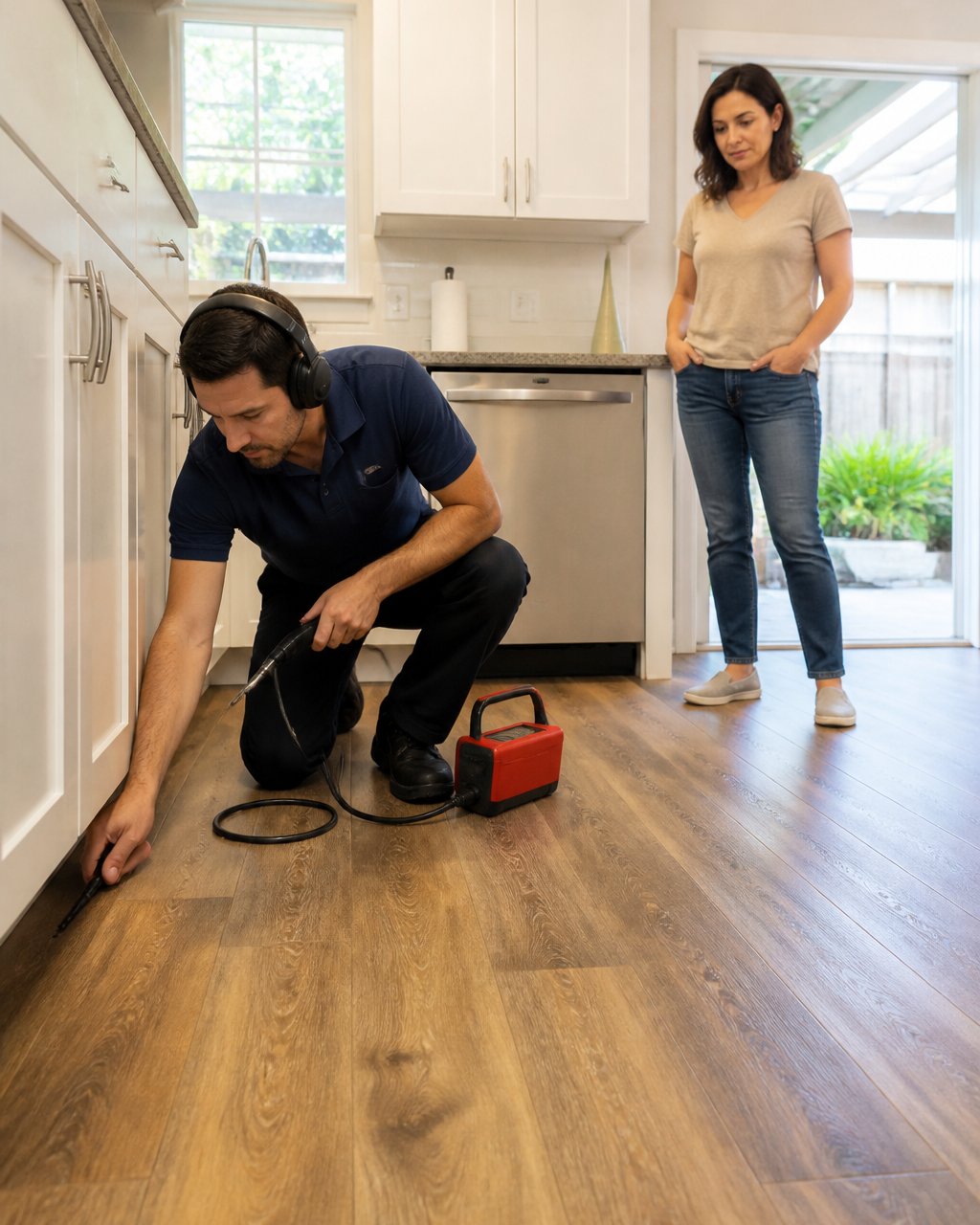
Most homeowners insurance policies do not cover the cost of leak detection itself. The diagnosis is typically your responsibility. This can be frustrating because finding a slab leak requires specialized equipment like acoustic sensors or thermal imaging cameras. A professional plumber may charge several hundred dollars to locate the leak.
However, some policies do cover diagnostics if the leak itself is covered. The logic is: if we're paying for the damage, we'll pay to confirm what caused it. This varies by insurer and policy. Call before you hire a detection service and ask whether your policy covers the diagnostic fee if the leak turns out to be covered.
Water mitigation costs, steps taken to prevent further damage after you discover the leak, may also be covered. If you need to shut off water, dry out affected areas, or remove damaged flooring to prevent mold, these emergency measures sometimes fall under your policy. Document everything. Take photos. Keep receipts.
Professional leak detection is worth the cost even if your insurance won't pay for it. Knowing exactly where the leak is located helps your adjuster assess the damage and makes repair quotes more accurate. We use advanced technology to pinpoint leaks with minimal disruption to your home, which also helps your insurance claim by showing you took reasonable steps to assess the problem.
Water Damage from Slab Leak Insurance Claims
This is where homeowners insurance slab leak coverage gets tricky. Your policy may cover the water damage caused by the leak but not the pipe repair itself. Or vice versa.
Water damage coverage typically includes:
- Damage to flooring, subflooring, and foundation
- Damage to personal property (furniture, belongings) in affected areas
- Costs to dry out and restore the space
- Mold remediation if mold develops from the water
Pipe repair coverage is less common. Many policies exclude the cost to access and replace the damaged pipe. They'll pay to fix what the water damaged, but not the source of the problem.
This creates an odd situation. Your insurer might pay $15,000 to replace damaged flooring and subflooring but refuse to pay $5,000 to fix the pipe that caused the damage. You end up paying for the repair yourself, then the leak returns because the underlying problem was never fixed.
Check your policy language carefully. Look for terms like "water damage" and "resulting damage." These usually refer to secondary damage caused by the leak. Look separately for coverage of "plumbing" or "pipe repair." These are different coverages with different limits.
Filing a Slab Leak Repair Insurance Claim Process
Once you've confirmed you have a slab leak, here's how the claim process typically works.
Step 1: Document the problem. Take photos of any visible signs: soft spots in flooring, water stains, cracks in concrete, or wet areas around your home.
Step 2: Call your insurance company. Report the leak and the suspected damage. Get the claim number and the name of your adjuster.
Step 3: Get a professional diagnosis. Hire a licensed plumber to locate the leak and provide a written report.

Step 4: Request an adjuster inspection. Your insurer will send an adjuster to assess the damage. Provide all your documentation. Walk the adjuster through the problem.
Step 5: Get a repair estimate. Obtain written quotes from licensed contractors for both leak repair and water damage restoration. Provide these to your adjuster.
Step 6: Review the adjuster's report. The adjuster will issue a report determining what's covered. This report determines your payout. Review it carefully.
Step 7: Approve repairs and submit invoices. Once approved, hire contractors and complete the work. Submit final invoices to your insurer for reimbursement.
This process typically takes 4-8 weeks from initial report to claim approval, depending on how quickly your adjuster can inspect and how complex the damage assessment is.
Common Insurance Exclusions and Policy Limitations
Every homeowners insurance policy includes exclusions. These are situations the policy specifically does not cover. For slab leaks, common exclusions include:
Gradual leaks and wear and tear. If the pipe slowly deteriorated over time, that's on you. Insurers don't cover maintenance failures.
Leaks caused by poor maintenance. If you ignored warning signs or failed to maintain your plumbing system, the claim gets denied.
Leaks in older homes with outdated plumbing. Some policies exclude coverage for homes with galvanized steel pipes or polybutylene pipes, which are known to fail over time.
Sewer line leaks. Many policies exclude sewer and drain line damage. This is often sold as an add-on endorsement if you want coverage.
Damage from flooding. If the leak is related to external flooding, your homeowners policy won't cover it. You'd need a separate flood insurance policy.
Damage that could have been prevented. If you knew about the leak and did nothing, the claim gets denied.
Policy limits and deductibles. Even covered damage is subject to your policy limits and deductible. If your deductible is $2,500 and the damage is $3,000, you pay the first $2,500 and the insurer pays $500.
Read your policy's "exclusions" section carefully. Call your agent and ask specifically about slab leaks. Get their answer in writing if possible.
When a Claim May Not Be Worth Filing
Not every slab leak warrants an insurance claim. Sometimes the math doesn't work in your favor.
Small leaks with minimal damage. If the leak is minor, the water damage is contained to one small area, and your repair cost is under $3,000, filing a claim may not be worth it. Your deductible alone might eat up most of the payout.
Leaks ruled gradual by the adjuster. If your adjuster determines the leak is gradual damage, the claim gets denied. Fighting the denial requires hiring an independent adjuster, which costs money. If the repair cost is modest, you might spend more on the appeal than on the fix.
Leaks in older homes with known pipe issues. If your home has galvanized steel pipes or polybutylene pipes, your insurer may have already excluded coverage for those materials. A claim attempt will just get denied.
Leaks you discovered late. If you've known about the leak for months but didn't report it, the insurer will argue you failed to mitigate damage. Delayed claims are harder to win.
Before filing, calculate your likely out-of-pocket cost. If your deductible is $2,500 and the total damage is $5,000, you'll receive $2,500 from insurance. Is it worth potentially raising your premiums for a $2,500 payout? Sometimes paying out of pocket makes more financial sense.
That said, if the damage is significant, thousands of dollars in flooring, subflooring, or foundation work, filing is almost always the right call. That's what insurance is for.
Conclusion
Homeowners insurance coverage for slab leaks depends on whether the damage qualifies as sudden and accidental, your specific policy language, and how your adjuster interprets the facts. Most policies cover resulting water damage but exclude the pipe repair itself. Gradual leaks are almost never covered.
The best approach is to get a professional diagnosis as soon as you suspect a slab leak, document everything carefully, and contact your insurer before you assume you know what's covered. California Leak Detection Specialists provides detailed diagnostic reports specifically formatted for insurance claims, with clear documentation that adjusters need to make coverage decisions quickly. Our team has helped homeowners navigate the claim process by providing accurate leak location, professional assessments, and the documentation insurers require. Call us at (951) 278-8999 to schedule a leak detection inspection and get the answers you need to move forward with confidence.
Frequently Asked Questions
Does homeowners insurance cover slab leak repairs?
Coverage depends on whether the leak is classified as sudden and accidental or gradual damage from wear and tear. Most homeowners insurance policies cover sudden, accidental leaks under the water damage peril. However, gradual leaks that develop over time due to aging pipes or lack of maintenance are typically excluded. Your specific policy language and endorsements determine what's covered. Contact your insurer to review your exact coverage before assuming a claim will be approved.
What should I do if I suspect a slab leak?
First, document any signs of the leak: wet spots, soft flooring, warm areas on the floor, or unusually high water bills. Take photographs and note when you first noticed the problem. Contact a licensed plumber for a professional inspection to confirm the leak and determine its location. Once you have a diagnosis, contact your insurance company promptly to report the potential claim. Provide your insurer with all documentation, photos, and the plumber's findings. Acting quickly helps establish the timeline and protects your claim.
Can homeowners insurance cover mold caused by a slab leak?
Coverage for mold depends on your policy and the circumstances. If the mold results from a covered water damage claim (a sudden, accidental leak), some policies may cover mold remediation up to a specified limit. However, many policies exclude or limit mold coverage, especially if the leak went undetected for an extended period. Mold from gradual leaks is typically not covered because the underlying damage itself is excluded. Review your policy's mold exclusions and limits, and discuss this with your adjuster when filing a claim.