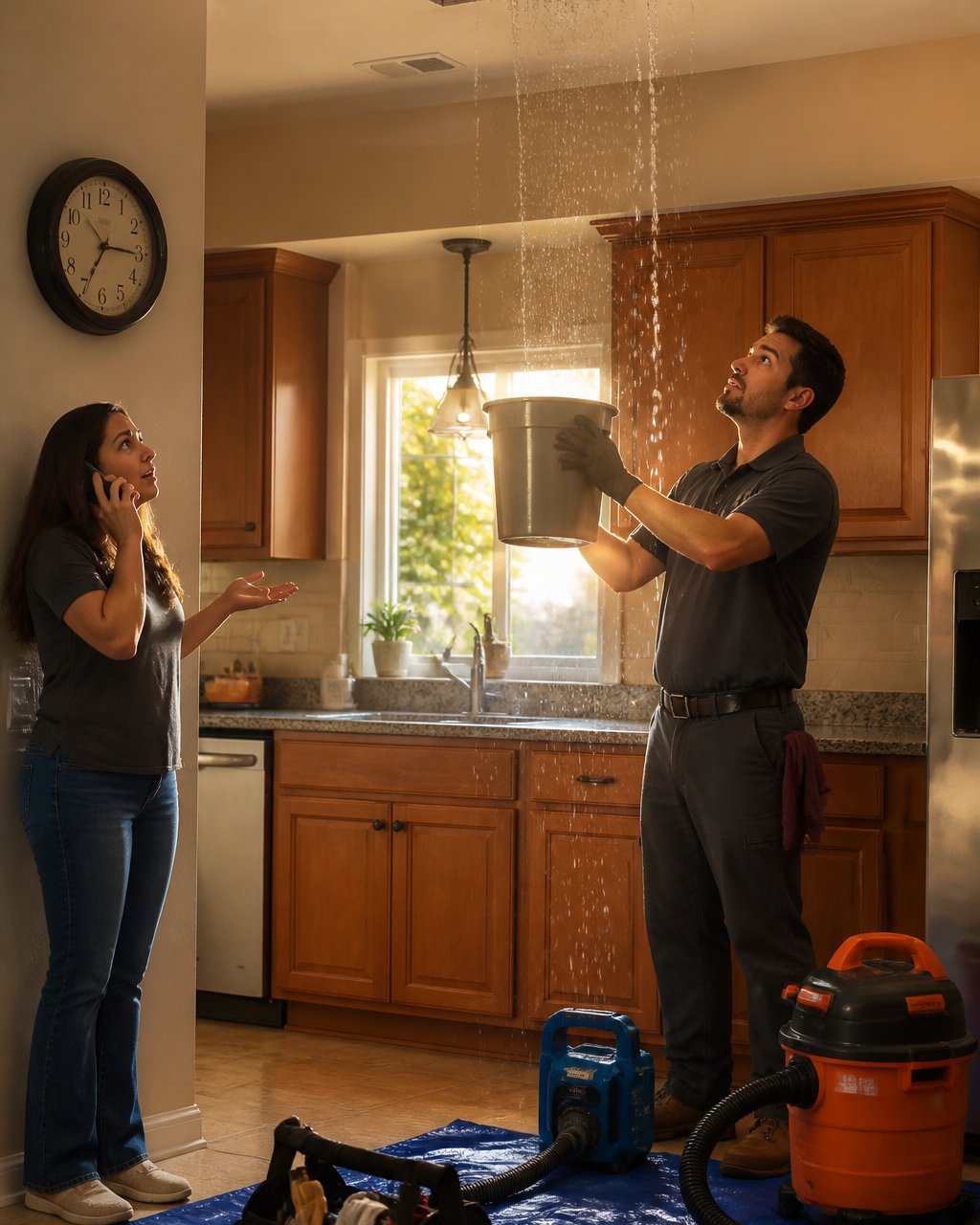
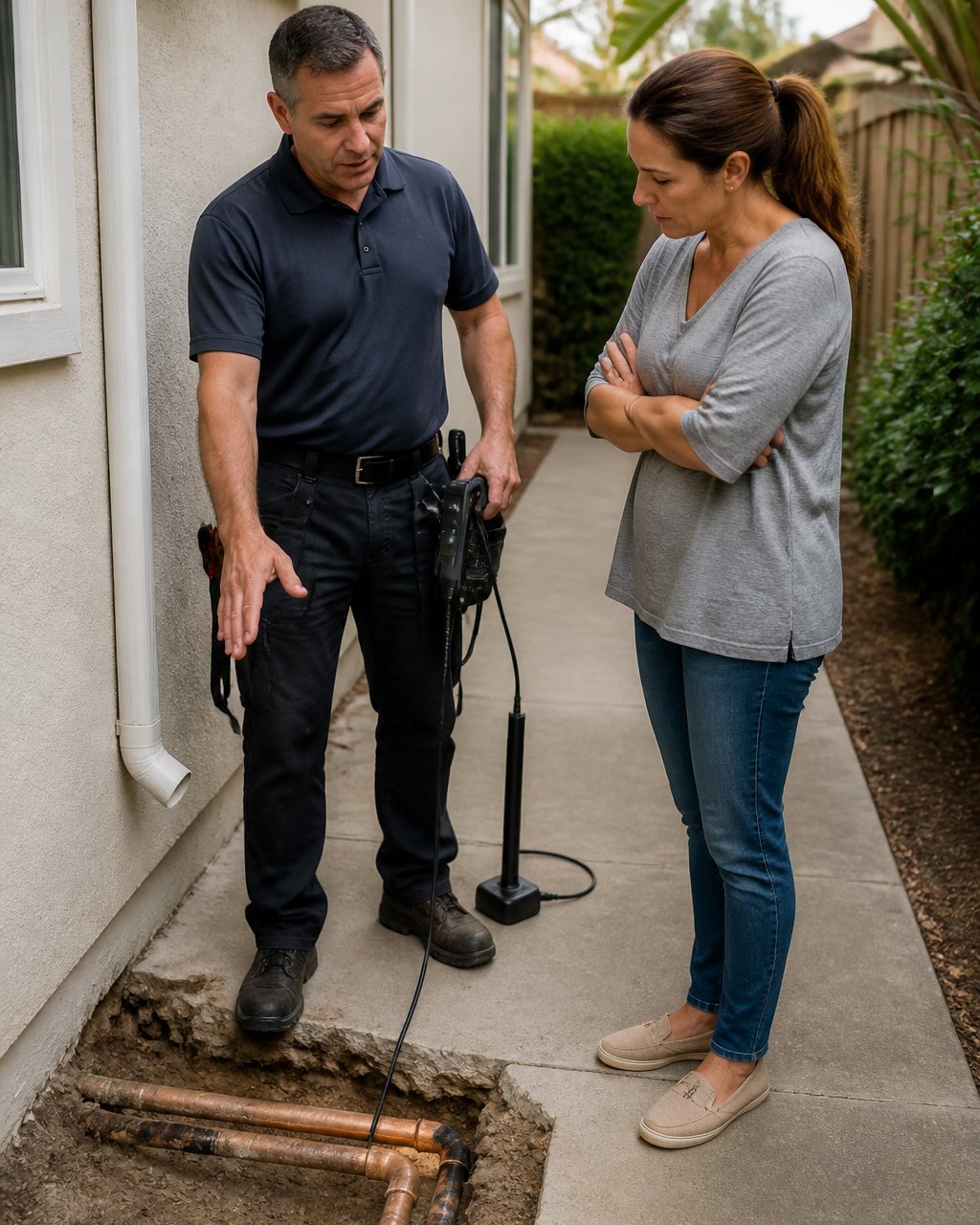
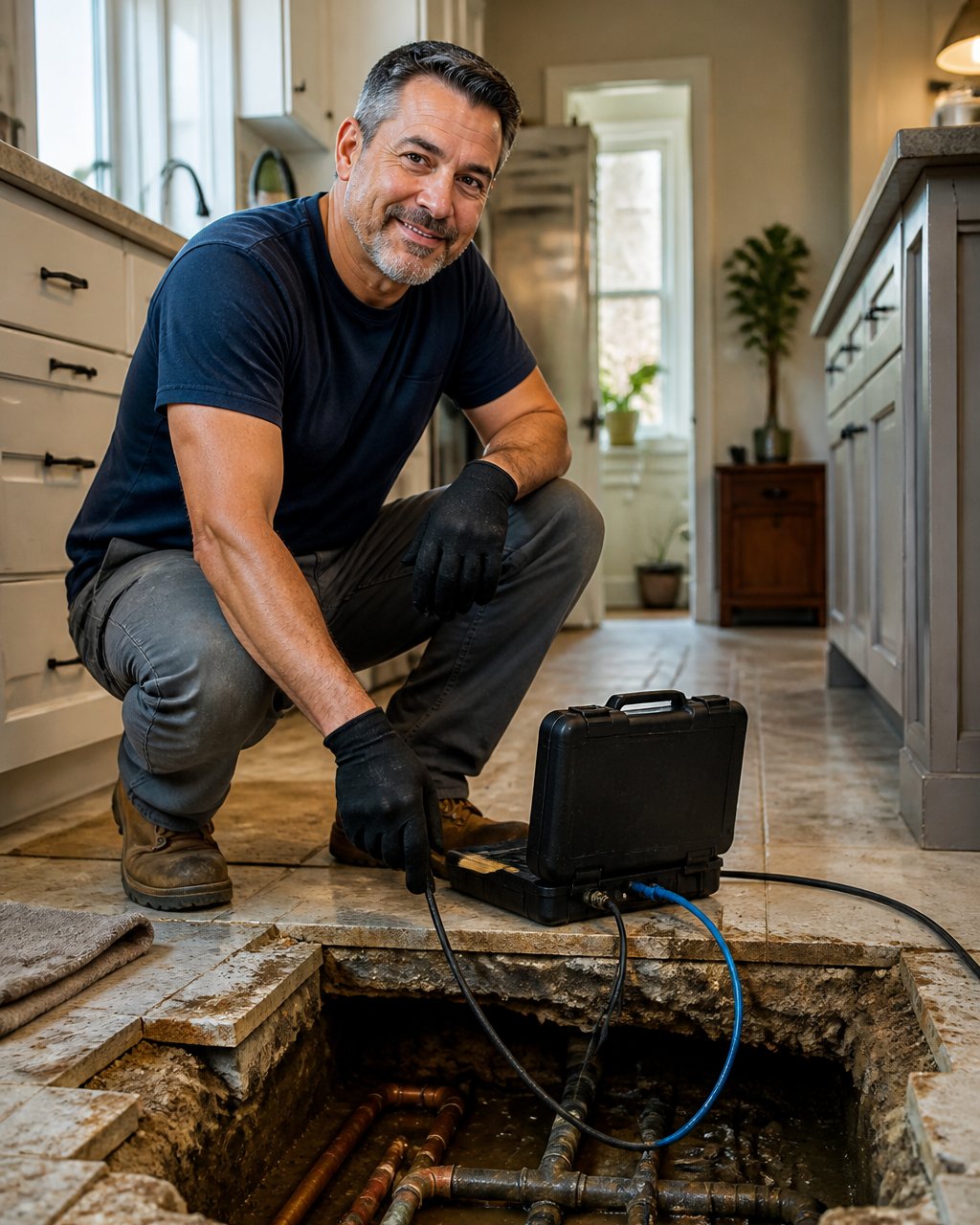
 comparison
Is Slab Leak Repair Worth It for Old Homes?
Table of Contents
- What a Slab Leak Is and Why Old Homes Are Vulnerable
- Signs Your Home Has a Slab Leak
- How Slab Leaks Are Detected
- Slab Leak Repair vs. Rerouting: Which Option Makes Sense
- Slab Leak Repair vs. Whole-House Repiping for Aging Pipes
- Slab Leak Repair Without Digging: Limited Options for Old Homes
- Slab Leak Insurance Coverage and Claim Documentation
- The Real Cost-Benefit: When Repair Makes Sense
- Frequently Asked Questions
Last Updated: October 16, 2026
What a Slab Leak Is and Why Old Homes Are Vulnerable
A slab leak is a water line break beneath the concrete foundation of your home. When pipes embedded in or under the concrete slab crack, corrode, or fail, water escapes into the soil below. Over time, this causes foundation damage, mold, and structural problems that compound.
Old homes are particularly vulnerable because their plumbing systems have had decades to deteriorate. Copper pipes corrode from the inside out. Galvanized steel pipes rust through. Older PVC can become brittle. The longer pipes sit in the ground, the higher the odds they'll develop weak spots. When a slab leak develops in a 40-year-old home, it's often a sign that other pipes in the system are aging too.
This distinction matters for your repair decision. A single spot repair might fix today's problem. But if your home's plumbing is genuinely old, you may face repeat leaks within a few years. That's why understanding your home's pipe age and condition is the first step in deciding whether slab leak repair makes financial sense.
At California Leak Detection Specialists, we help homeowners in older properties understand this reality upfront. The question isn't just "Can we fix this leak?" It's "Will fixing this leak solve the underlying problem, or delay an inevitable larger repair?"
Signs Your Home Has a Slab Leak
Detecting a slab leak early prevents catastrophic water damage and foundation problems. Watch for these warning signs:
Water bill spikes without explanation. If your water usage suddenly jumps 20-30% with no change in household habits, a hidden leak is the most likely culprit. Check your meter before and after running no fixtures. If it moves, water is escaping somewhere.
Warm spots on your floor. Hot water lines leak more noticeably than cold lines because the escaping water warms the concrete above. Walk barefoot across your foundation floor. Unexplained warm patches often indicate a hot water line failure beneath the slab.
Foundation cracks appearing or widening. Escaping water softens soil beneath the foundation. As the soil shifts, the concrete develops new cracks or existing ones spread. This is a late-stage sign, the leak has been active for months or longer.
Mold or musty odors in crawl spaces or basements. Persistent moisture from a slab leak creates the exact environment mold needs. If you notice mold growth or a damp smell that won't go away, moisture is entering from below.
Reduced water pressure throughout the home. A major slab leak can reduce pressure across your entire plumbing system. If pressure dropped suddenly and you have no obvious leaks at fixtures, the problem is likely hidden.
Soft spots or indentations in your yard. Saturated soil from a slab leak can create sunken areas in your lawn or driveway. These spots may appear weeks or months after the leak starts.
How Slab Leaks Are Detected
Precision leak detection is what separates a targeted repair from destructive guesswork. Modern leak detection doesn't require tearing up your entire slab.
Professional technicians use acoustic listening devices and thermal imaging to pinpoint exactly where water is escaping. Acoustic sensors detect the sound of pressurized water spraying from a broken pipe. Thermal imaging shows temperature anomalies in the concrete where water is actively flowing. Combined, these methods narrow the leak location to within a few feet, sometimes inches.
Some detection services also use tracer dyes or electronic line locators to confirm pipe locations before any digging begins. This precision matters enormously for your wallet. A targeted excavation costs far less than exploratory digging across multiple areas of your foundation.
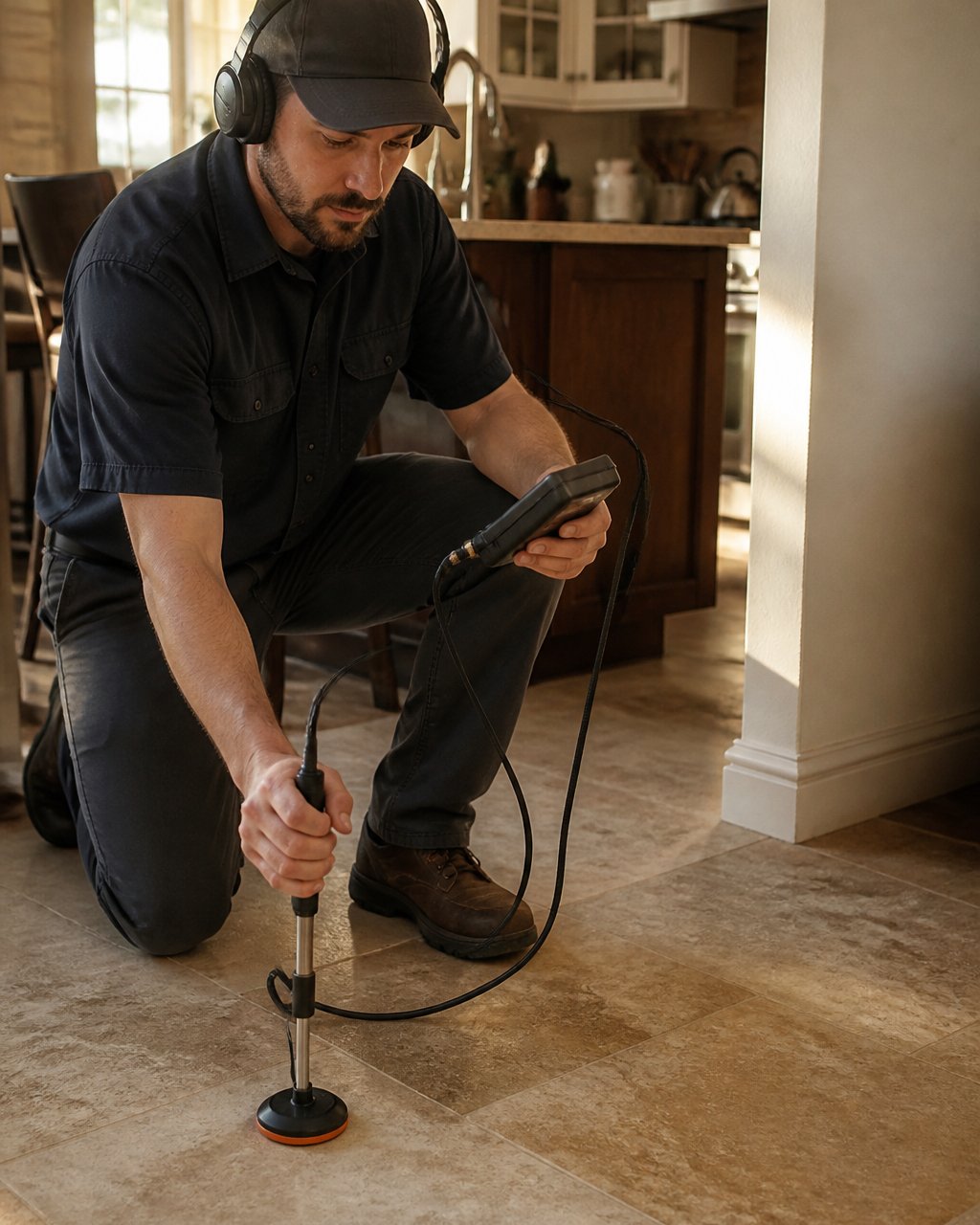
A thorough inspection includes checking water pressure, listening for acoustic signals, and thermal scanning of the foundation perimeter. Documentation from this process becomes critical later if you file an insurance claim, clear photos and technical notes prove the leak exists and where it's located.
Slab Leak Repair vs. Rerouting: Which Option Makes Sense
Once a leak is confirmed, you face a fundamental choice: repair the damaged section or reroute the line entirely.
Spot repair addresses only the broken section of pipe. A technician excavates the damaged area, removes the failed pipe segment, and replaces it. For a single leak in a relatively young plumbing system, this is the most cost-effective option. You restore function and move forward.
Rerouting runs new pipe around or above the slab, bypassing the original line entirely. The old pipe stays in place, abandoned.
For old homes, rerouting often wins the cost-benefit analysis. Here's why: if your home's copper or galvanized pipes are 40+ years old, the section that leaked is rarely the only weak point. Other sections are corroding too. A spot repair fixes today's problem but leaves tomorrow's failure in the ground.
Rerouting costs more upfront, new pipe, labor, and restoration. But it eliminates the risk of a repeat failure in the same line within 2-3 years. For homeowners who plan to stay in their home for another 10+ years, rerouting prevents the cycle of repeated repairs.
Slab Leak Repair vs. Whole-House Repiping for Aging Pipes
When a slab leak surfaces in a home built in the 1980s or earlier, the real question emerges: should you fix just this leak, or replace your entire plumbing system?
Whole-house repiping means replacing all water supply lines throughout your home, not just the section under the slab. New copper, PEX, or PVC replaces aging galvanized or corroded original pipes.
This is the most comprehensive solution and the most disruptive. Walls may need to be opened. Ceilings may require access. Your water will be shut off during installation.
The cost is substantial, but consider the payoff: no more hidden leaks, restored water pressure, elimination of corrosion-related water quality issues, and a plumbing system with 50+ years of remaining lifespan. For homes where multiple leaks have already appeared, or where the original plumbing is known to be severely compromised, repiping is often the only repair that truly solves the problem.
For a single slab leak in a home where other pipes are still performing well, repiping is probably overkill. But if your home is 50+ years old and this is your second or third leak in five years, repiping stops the cycle entirely.
| Repair Option | Best For | Key Trade-off |
|---|---|---|
| Spot repair | Single leak in relatively young system | Risk of repeat failure in same line |
| Rerouting | Corroded line with history of leaks | Higher upfront cost, eliminates one line only |
| Whole-house repiping | Multiple leaks, severely aged system | Significant disruption, highest cost |
Slab Leak Repair Without Digging: Limited Options for Old Homes
Homeowners naturally hope for a solution that avoids excavation entirely. Unfortunately, true no-dig repair options for slab leaks are extremely limited.
Pipe coating (also called epoxy pipe lining) can seal small internal corrosion in pipes. A resin coating is applied inside the pipe to stop leaks at pinhole sites. This works only for very small leaks and only if the pipe isn't already severely compromised. For a major break or a corroded section, coating won't hold.
Spot repair with minimal excavation is more realistic. Modern detection pinpoints the exact leak location, allowing technicians to excavate only the necessary area, often 2-4 feet of concrete rather than tearing up your entire foundation. After repair, the concrete is patched and restored.
For old homes, the hard truth is this: if your slab leak is significant enough to warrant professional repair, some excavation is almost always necessary. The good news is that precision detection means that excavation is targeted and minimal, not exploratory and destructive.
Avoid any contractor who promises to fix a slab leak without seeing or accessing the damaged pipe. They're either overselling their capabilities or planning to cut corners that will leave you with a recurring problem.
Slab Leak Insurance Coverage and Claim Documentation
Many homeowners assume homeowner's insurance won't cover slab leaks. That assumption is often wrong, but coverage depends heavily on the cause and your specific policy.
Sudden, accidental damage is typically covered. If a pipe bursts due to freezing temperatures or a structural shift, your insurer will likely pay for the repair.
Gradual corrosion and wear are typically not covered. If your 45-year-old galvanized pipe simply rusted through after decades in the ground, insurers classify this as maintenance failure, not a covered loss.
Water damage from the leak is often covered. Even if the pipe failure itself isn't covered, damage to your home's structure, flooring, or belongings caused by the escaping water may be. This is where professional documentation becomes invaluable.
When you file a claim, your insurer will want clear evidence: photos of the leak location, thermal imaging showing water damage, a professional assessment of the damage extent, and repair estimates. This documentation proves the loss is legitimate and quantifiable.
California Leak Detection Specialists provides detailed reports with photos, thermal imaging, and technical analysis specifically formatted for insurance claims. Clear documentation accelerates approval and prevents denials based on insufficient evidence.
The Real Cost-Benefit: When Repair Makes Sense
The decision to repair a slab leak hinges on four factors: your home's age, the pipe's condition, your ownership timeline, and the leak's severity.
For homes under 30 years old: Spot repair usually makes sense. Your plumbing system is likely younger, and a single leak doesn't necessarily signal system-wide failure.
For homes 30-50 years old: Assess the pipe's overall condition. If this is your first leak and other pipes perform well, rerouting the damaged line is a reasonable middle ground.
For homes over 50 years old: Pipe age is working against you. A single slab leak is often the first visible sign of system-wide aging. Spot repair is the cheapest option but highest-risk.
For homes where you plan to stay 10+ years: Repiping becomes more cost-effective because you'll use the system long enough to justify the investment.
For homes you plan to sell within 5 years: Repair or reroute to address the immediate issue.
The hardest truth is this: there's no universal "right" answer. A slab leak repair is worth it if it solves your actual problem without creating a new one.
Water damage from a hidden slab leak spreads silently beneath your home. The longer it goes undetected, the more expensive the repair becomes.
Frequently Asked Questions
Are slab leaks covered by homeowners insurance?
Coverage depends on your policy and the leak's cause. Sudden, accidental water damage from a slab leak is typically covered, but gradual damage from aging pipes or lack of maintenance may not be. Review your homeowner's insurance policy or contact your insurer to confirm coverage. Professional documentation from a licensed leak detection specialist strengthens your claim significantly.
Can you fix a slab leak without digging?
Spot repair of a slab leak requires accessing the damaged pipe, which usually means cutting or tunneling through the concrete. For old homes with multiple aging pipes, whole-house repiping avoids repeated repairs but involves more disruption. The best approach depends on pipe condition and your long-term ownership plans.
Is it better to repair a slab leak or reroute the pipe?
Spot repair fixes the immediate leak but leaves aging pipes vulnerable to future failures. Rerouting bypasses the damaged section and reduces repeat leaks, making it cost-effective for homes with older plumbing. If your pipes show widespread corrosion or you plan to stay long-term, rerouting is often the better investment. For short-term ownership or isolated leaks, spot repair may be sufficient. A professional inspection reveals pipe condition and helps you decide.
How do I know if a slab leak repair was successful?
After repair, monitor your water bill for drops and check for hot spots or moisture on the floor. A professional technician can perform follow-up leak detection to confirm the repair sealed the leak. Ask your contractor for documentation and a warranty on the repair work. If your water bill remains high or new symptoms appear within weeks, contact your contractor immediately to address the issue.