 ultimate-guide
Signs of Hidden Water Leaks Under Slab: A Homeowner's Guide
Table of Contents
- What a Slab Leak Is and Why Early Detection Matters
- The Most Reliable Warning Signs of a Hidden Water Leak Under Slab
- How to Detect a Slab Leak Without Breaking Concrete
- Slab Leak vs. Other Water Problems: How to Tell the Difference
- The Slab Leak Insurance Claim Process: Documentation and Next Steps
- What Happens if a Slab Leak Goes Unrepaired
- Frequently Asked Questions
Last Updated: October 5, 2026
What a Slab Leak Is and Why Early Detection Matters
A slab leak is a water line break that occurs beneath the concrete foundation of your home. Unlike visible leaks under your sink or in your walls, slab leaks remain out of sight until they cause significant damage, making early detection critical.
The problem isn't just the water itself. A small, undetected leak can saturate soil beneath your foundation, causing it to shift and settle unevenly.
At California Leak Detection Specialists, we've seen how quickly homeowners' situations escalate when they ignore early warning signs. That's why recognizing the first indicators of a slab leak matters so much.
The Most Reliable Warning Signs of a Hidden Water Leak Under Slab
The most reliable warning signs of a hidden water leak under slab fall into seven distinct categories. Each one tells a story about what's happening beneath your foundation. Learning to recognize them gives you a fighting chance to catch the problem before structural damage occurs.

Unexplained Spikes in Your Water Bill
Your water meter is one of the most honest diagnostics tools in your home. When your water usage suddenly increases without a corresponding change in your household behavior, no new pool, no extra laundry, no guests, a hidden water leak under slab is a prime suspect.
A typical household uses between 80 and 100 gallons per person per day. If your bill jumps 25 percent or more in a single month with no explanation, investigate immediately. Even a small pinhole leak in a water line running beneath your slab can waste thousands of gallons monthly.
Warm or Hot Spots on Your Floor
This sign is particularly telling because it points directly to the hot water line. If you notice areas of your tile, concrete, or flooring that feel warmer than surrounding surfaces, especially in spots where no appliance or heating duct should be, a leak in your hot water line is likely occurring.
Walk barefoot across your floors periodically, especially in hallways, living rooms, and bedrooms. A warm spot that persists is not normal. It means hot water is escaping from a pipe beneath the slab and warming the concrete above it. This is one of the most specific indicators that your problem is a hot water line leak rather than a cold water line break.
Strange Sounds: Running, Hissing, or Whooshing Water
Listen to your home when all water fixtures are off. If you hear the sound of running water, a hissing noise, or a whooshing sound with no obvious source, water is moving where it shouldn't be.
These sounds travel through your concrete slab and the water pipes embedded within it. Running water sounds suggest continuous flow from a break. Hissing indicates water under pressure escaping through a small opening. Whooshing might signal water moving through a larger crack or pooling area. None of these sounds should occur when your home is quiet and no one is using water.
Damp, Wet, or Unusually Warm Flooring
Beyond warm spots, look for actual moisture. Damp flooring that doesn't correspond to spills, condensation, or roof leaks suggests water is coming from below. You might notice wet carpet, soft spots in wood flooring, or persistent dampness in tile grout.
Check the same areas repeatedly over several days. If the dampness returns after you've dried it, water is actively entering from beneath the slab. This is a clear signal that structural water damage is underway.
Low Water Pressure or Sudden Changes in Water Flow
When a pipe cracks beneath your slab, water escapes before reaching your fixtures. This reduces the volume of water available at your taps, showers, and toilets. If pressure drops suddenly across multiple fixtures in your home, a major water line leak is likely.
Note whether the pressure loss is gradual or sudden, and whether it affects hot water, cold water, or both. A hot water line leak will reduce hot water pressure while cold water pressure remains normal. A main water line break affects both. These distinctions help professionals narrow down the location and severity of the problem.
Mold, Mildew, or Musty Odors
Moisture beneath your slab creates the perfect environment for mold and mildew growth. If you notice musty, earthy odors in rooms with no visible water damage, and these smells persist even after cleaning, mold is likely growing in hidden spaces below your flooring.
Mold and mildew are not just unpleasant, they pose health risks, especially for children, elderly family members, and anyone with respiratory sensitivities. A musty smell is your home's way of signaling that moisture is present where it shouldn't be.
Cracks in Floors, Walls, or Your Foundation
Water beneath your slab causes soil to shift and settle unevenly. This movement creates stress on your concrete foundation and the structure above it. Cracks that appear suddenly, spread rapidly, or follow patterns (especially in corners or near doorways) suggest foundation movement caused by water damage.
Pay attention to new cracks that weren't present months ago. Small hairline cracks in grout or drywall can be normal, but cracks in concrete flooring or foundation walls that widen over time are warning signs. Stair-step cracking in brick or block walls is particularly concerning, it indicates significant structural stress.
How to Detect a Slab Leak Without Breaking Concrete
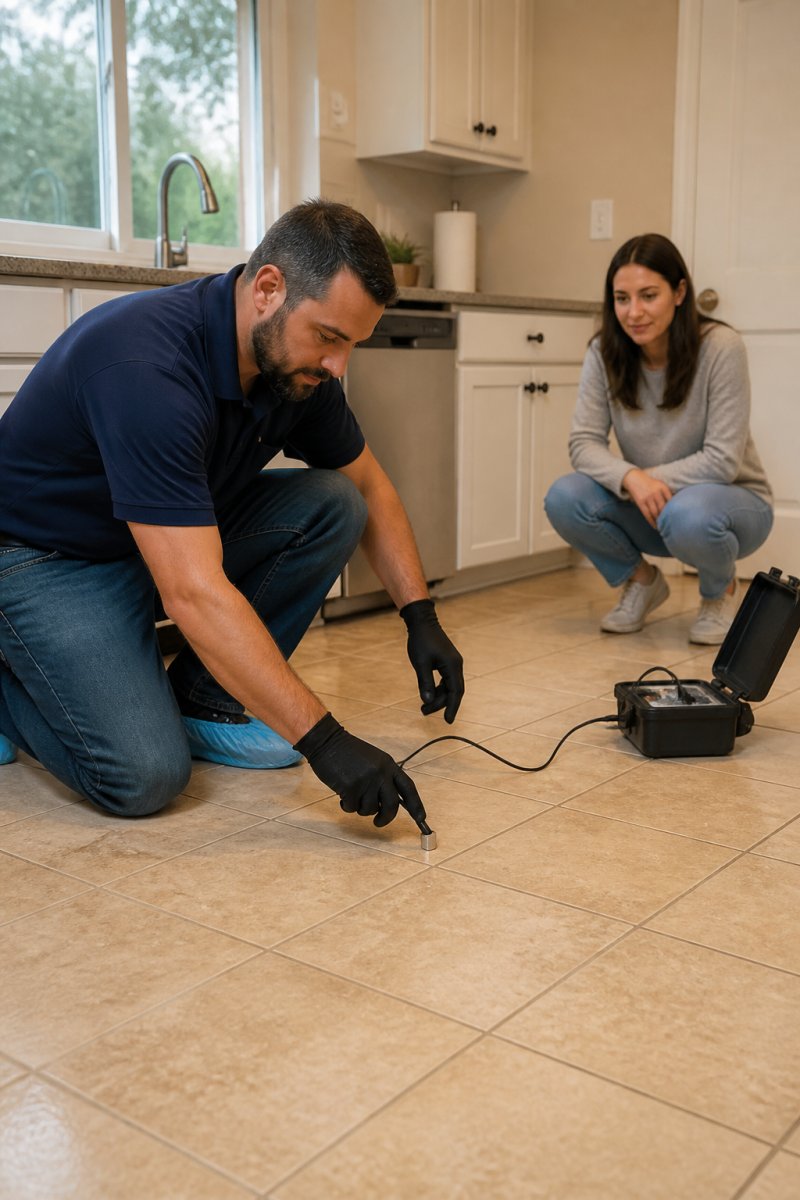
Before any concrete is broken, professionals use non-invasive methods to confirm the location and severity of a hidden water leak under slab. These detection techniques minimize disruption while providing the accuracy needed for targeted repairs.
Acoustic Leak Detection
Acoustic detection uses sensitive listening equipment to identify the sound of water escaping under pressure. A technician places sensors on your flooring and listens through headphones for the distinctive sound of water escaping from a pressurized line.
This method works best for active leaks in water supply lines, where water is moving under pressure. The escaping water creates vibrations and sound frequencies that travel through concrete and soil. A trained technician can pinpoint the general area where the leak is occurring, often within a few feet of the actual break. Acoustic detection doesn't require digging and provides immediate feedback.
Thermal Imaging
Thermal cameras detect temperature differences invisible to the human eye. A leak in your hot water line creates a warm zone in the concrete above it. A thermal imaging camera captures this heat signature and displays it on a screen, showing exactly where the warmer area exists.
Cold water leaks are harder to detect with thermal imaging alone, since cold water doesn't create a visible temperature difference. However, the moisture from a cold water leak can be detected if it reaches the surface and evaporates, creating a cooler zone. Thermal imaging is often combined with other methods for comprehensive diagnosis.
Water Meter Testing
Your water meter provides hard evidence of whether a leak exists. A technician turns off all water-using appliances and fixtures in your home, then watches your meter. If the meter continues to move, water is escaping somewhere in your system.
To narrow down the location, the water supply to your home can be isolated at different points. If the meter stops moving when the main line is shut off but continues when it's open, the leak is in your main supply line. If it continues even when the main is closed, the leak is in a secondary line or inside your home. This simple test provides critical information about where the problem lies.
Slab Leak vs. Other Water Problems: How to Tell the Difference
Not every water problem is a slab leak. Condensation, roof leaks, burst pipes in walls, and sewer line failures can all create similar symptoms.
Condensation occurs when warm, humid air meets cold surfaces.
Roof leaks create water stains on ceilings and upper walls, typically appearing during or immediately after rain. Water from a roof leak flows downward and follows gravity.
Burst pipes in walls may produce water stains on drywall, soft spots in walls, or mold growth on interior surfaces.
Sewer line failures produce foul odors, slow drains, and sometimes sewage backing up into your home. A sewer camera inspection can confirm whether your problem is a water line or a drain line.
The key distinction: a slab leak produces unexplained water usage, moisture beneath your home, and foundation damage, without obvious visible water inside your home.
The Slab Leak Insurance Claim Process: Documentation and Next Steps
Many homeowners are surprised to learn that homeowner's insurance may cover slab leak repairs, depending on your policy and the cause of the leak. Understanding the documentation process improves your chances of approval and simplifies the claim.
Start by documenting everything. Photograph areas of moisture, warm spots, cracks, and any visible damage.
Contact your insurance company and describe the situation. They will likely require a professional inspection report from a licensed plumber. This is where California Leak Detection Specialists can help.
Your insurance adjuster may visit your home to assess the damage. Be present during this visit and provide all documentation.
If your claim is approved, work with your insurance company to select a contractor for repairs.
If your claim is denied, ask for a written explanation. Sometimes denials are based on policy exclusions (like gradual leaks or damage that occurred before your coverage began).
What Happens if a Slab Leak Goes Unrepaired
Ignoring a slab leak doesn't make it go away, it makes it worse.
Water continuously escaping beneath your foundation saturates the soil below. Soil loses its load-bearing capacity when wet.
As moisture accumulates, mold and mildew flourish in the dark, damp environment beneath your home.
Your flooring suffers direct damage. Wood floors buckle and warp. Tile grout deteriorates. Carpet develops permanent odors. Subflooring rots.
The structural damage extends beyond the slab. As the foundation shifts, it stresses the walls and framing above it.
Your water bill continues climbing. Over a year, a small leak can waste tens of thousands of gallons of water.
The longer you wait, the more expensive the final repair becomes.
Frequently Asked Questions
How can I tell if there's a water leak under my concrete slab?
Look for unexplained increases in your water bill, warm or hot spots on your floor, sounds of running or hissing water, damp flooring, low water pressure, musty odors, or foundation cracks. A single sign may not confirm a slab leak, but multiple warning signs together strongly suggest one. Professional leak detection using acoustic or thermal imaging can pinpoint the exact location without breaking concrete.
How long can a slab leak go undetected?
A slab leak can remain hidden for months or even years if the water drains away slowly or if you don't notice gradual changes in your water bill or home condition. However, the longer it goes unrepaired, the greater the risk of structural damage, mold growth, and water damage to flooring and foundation. Early detection prevents expensive repairs and health hazards.
What happens if water gets under a concrete slab?
Water under your slab can erode soil, weaken the foundation, cause cracks in concrete and walls, promote mold and mildew growth, damage flooring materials, and create health risks. Over time, foundation settlement and structural instability may occur. Continuous water escape also drives up utility bills and wastes water. Professional inspection and repair stop the damage before it becomes severe.
Does a high water bill always mean a slab leak?
Not always. High water bills can result from running toilets, leaking faucets, roof leaks, or simply increased household usage. However, if your usage habits haven't changed and your bill jumped suddenly, a hidden slab leak is a strong possibility. A water meter test or professional inspection can confirm whether the leak is under your slab or elsewhere in your plumbing system.
If you've noticed any of these warning signs, don't wait. A professional inspection from California Leak Detection Specialists can confirm whether you have a slab leak and document the findings for your insurance claim. We provide clear, detailed reports that help you understand exactly what's happening beneath your foundation and what repair approaches make sense for your situation. Call us at (951) 278-8999 to schedule your inspection and protect your home from further damage.