 blog
blog
Emergency Plumbing Leak Detection Services: What to Know
Table of Contents
- When You Need Emergency Plumbing Leak Detection Services
- Water Leak Warning Signs That Demand Immediate Attention
- What to Do Before an Emergency Plumber Arrives
- Hidden Water Leak Detection Methods Professionals Use
- Slab Leak Detection and What It Means for Your Home
- How Emergency Leak Detection Protects Your Insurance Claim
- What to Expect During an Emergency Service Call
- Conclusion
- Frequently Asked Questions
Last Updated: October 13, 2026
When You Need Emergency Plumbing Leak Detection Services
A water leak that goes undetected can cause thousands of dollars in damage within days. At California Leak Detection Specialists, we understand that emergency plumbing leak detection services become critical the moment you suspect something is wrong, whether it's a visible drip, a sudden spike in your water bill, or soft spots appearing in your foundation. We only do residential leak detection.
The challenge isn't always knowing you have a leak. The real problem is pinpointing where it is before it destroys your home's structure, creates mold, or invalidates your insurance coverage. That's where professional emergency leak detection makes the difference.
Most homeowners wait too long. They notice water stains, hear hissing sounds, or see their water meter running when nothing is on, and then they call. By that point, the leak has often been running for weeks or months. Emergency plumbing leak detection services exist precisely for this reason: to find the source fast, document it properly, and stop the damage before it becomes catastrophic.
Water Leak Warning Signs That Demand Immediate Attention
Not every water problem requires an emergency response, but certain signs tell you to call right away. Understanding what to watch for helps you act before hidden water leak damage spirals out of control.
A sudden increase in your water bill without any change in usage is one of the most reliable indicators. Even a small leak, one that drips just once per second, wastes thousands of gallons per month.
Soft, spongy, or discolored patches on your floor, walls, or ceiling are visual red flags. If you press on these areas and they feel soft or collapse slightly, water damage is already underway.
Musty odors in specific rooms suggest mold is developing. Mold grows quickly in damp environments and becomes a health hazard.
Listen for running water sounds when all fixtures are off. A constant hissing, trickling, or flowing sound coming from walls, under the floor, or near the foundation points to an active leak.
Cracks in your foundation, especially new ones or ones that seem to be growing, warrant immediate attention. Water leaks from slab leaks create hydrostatic pressure that pushes up on concrete, causing it to crack and shift.
What to Do Before an Emergency Plumber Arrives
The minutes between discovering a leak and when a professional arrives matter. Your actions during this window can prevent additional damage and preserve evidence your insurance company will need.
First, turn off the main water supply if the leak is active and visible.
If water is actively flowing into living spaces, move valuables away from the affected area. Electronics, documents, furniture, and personal items should be relocated to dry areas.
Document what you see. Take photos or video of wet spots, stains, soft areas, or any visible water. Capture the room, the location, and close-ups of damage.
Open windows and doors to improve air circulation in affected areas. Increased airflow slows mold growth and helps moisture evaporate. If you have a dehumidifier, turn it on in the affected room.
Do not attempt to find or repair the leak yourself. Digging, cutting into walls, or removing flooring without knowing where the leak is located often causes more damage than the original leak.
Gather your homeowner's insurance information and policy documents. Have your policy number, your agent's contact information, and a list of recent home improvements or repairs ready.
Hidden Water Leak Detection Methods Professionals Use
Professional leak detection doesn't rely on luck or guesswork. Specialists use proven methods and equipment designed to pinpoint leaks without tearing apart your home.
Acoustic leak detection listens for the sound water makes as it escapes from pressurized pipes.
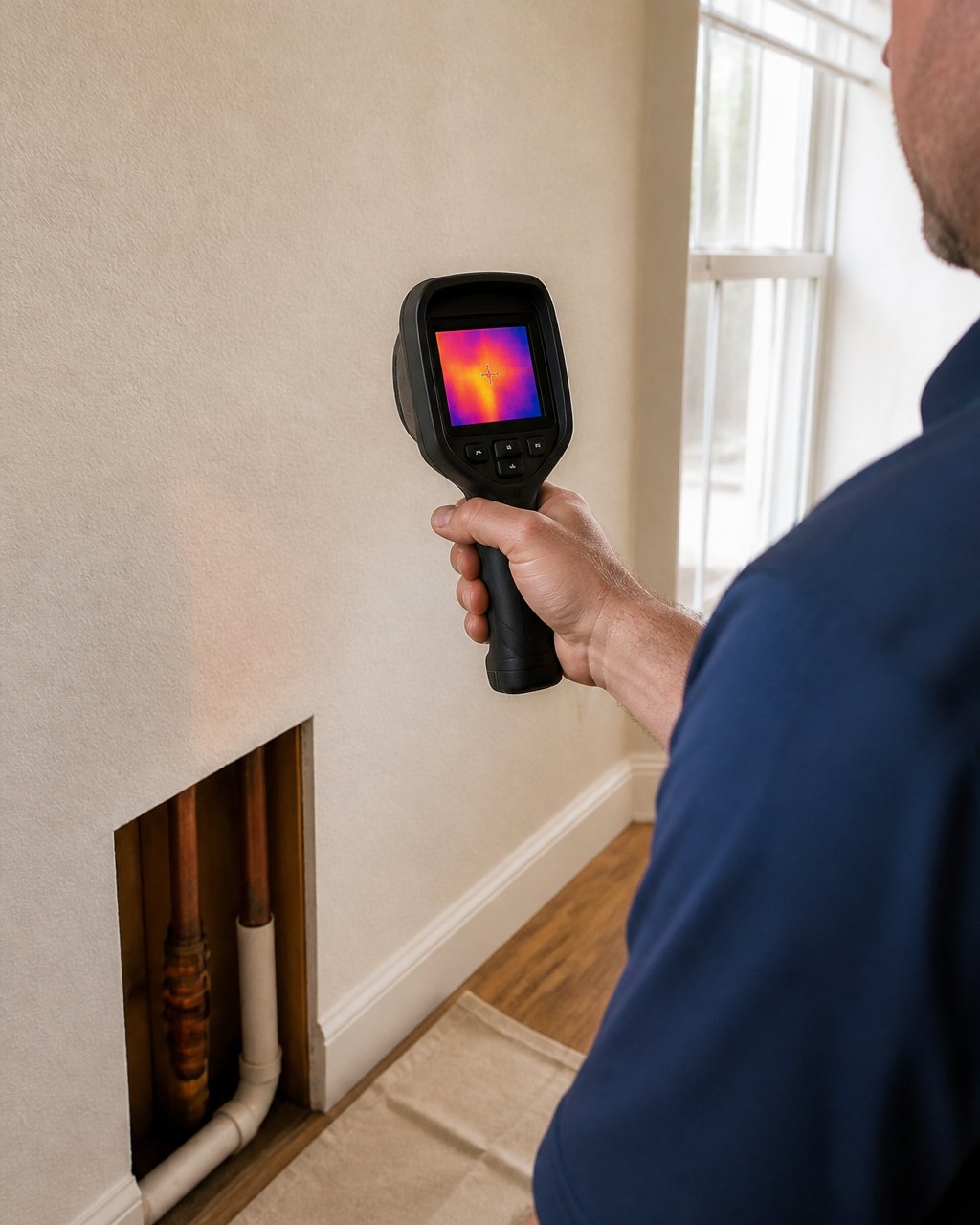
Thermal imaging detects temperature differences caused by water movement. A leak creates a cold spot where water is escaping and evaporating.
Moisture meters measure the water content in materials like drywall, wood, and concrete. Technicians use these handheld devices to scan walls, floors, and ceilings, identifying areas where moisture has accumulated.
Video inspection equipment sends a small camera through pipes to show what's happening inside. For sewer lines and drain systems, this camera reveals cracks, breaks, root intrusion, or blockages.
Tracer gas detection involves introducing an inert gas into the water line and then using a sensitive detector to find where it escapes.
The method a professional chooses depends on where they suspect the leak is located. A leak behind a wall calls for acoustic or thermal imaging.
Slab Leak Detection and What It Means for Your Home
A slab leak occurs when water lines running beneath your home's concrete foundation develop cracks or holes. These leaks are particularly serious because they're hidden from view and can cause foundation damage if left unaddressed.
Slab leak detection requires specialized expertise because the problem exists under several inches of concrete. Early warning signs include warm spots on your floor (from hot water leaks), cracks in the slab itself, or unusually high water bills with no visible leaks inside the house.
When a slab leak is confirmed, you have repair options. Some leaks can be addressed by rerouting water lines through the walls or attic, a process called repiping. Other situations may require spot repairs if the leak location is accessible. The specific approach depends on the leak's location, your home's layout, and your insurance coverage.
Slab leaks demand prompt attention because water pooling beneath your foundation creates hydrostatic pressure. This pressure can crack the concrete, shift the foundation, and cause structural problems that affect your entire home. Mold can also develop in the soil beneath the slab, creating air quality issues inside your home.
How Emergency Leak Detection Protects Your Insurance Claim
Your homeowner's insurance covers sudden, accidental water damage, but only if you can document that the damage resulted from a covered peril. This is where professional emergency plumbing leak detection services become essential for your claim.
Insurance adjusters need clear evidence of what caused the damage. A professional leak detection report provides exactly that: detailed findings about where the leak originated, how long it likely ran, and what damage resulted. This documentation transforms a vague claim ("there's water in my wall") into a specific, credible case.
A professional report includes photos, measurements, equipment readings, and expert conclusions. When an adjuster sees that a licensed specialist identified the leak using acoustic detection, thermal imaging, or video inspection, they're more likely to approve the claim.
Timing matters for insurance purposes. The sooner you document the leak and have it professionally assessed, the clearer the cause-and-effect relationship becomes. A leak discovered and documented within days carries more weight than one discovered months later when damage is extensive and the cause is less obvious.
Keep all documentation organized: the initial leak detection report, photos, repair estimates, and any communication with your insurance company. When your claim goes to an adjuster, this file becomes your evidence package.
What to Expect During an Emergency Service Call
Understanding what happens during an emergency plumbing leak detection visit removes uncertainty and helps you prepare.
When the technician arrives, they'll start by asking detailed questions: When did you first notice the problem? What signs led you to call? Have you had plumbing work done recently? Do you know where your main water shutoff is?
Next, they'll visually inspect the affected area. They're looking for water stains, soft spots, discoloration, odors, and any visible moisture. This walk-through gives them initial clues about the leak's location and severity.
Then they'll deploy detection equipment based on their initial assessment. If they suspect a wall leak, they'll use acoustic listening devices or thermal imaging. For a suspected slab leak, they'll scan the floor with moisture meters and acoustic equipment.
Once they've located the leak, they'll explain their findings clearly. They'll show you where the leak is, what's causing it, and what repair options exist.
Before they leave, ask for a detailed written report. This report should include the leak's location, detection method used, photos or readings, and recommended repairs. This documentation becomes invaluable for insurance purposes and for any repairs you decide to pursue.
Conclusion
Water leaks don't announce themselves until damage is already underway. The moment you suspect a problem, a spike in your water bill, soft spots on your floor, or the sound of running water with nothing on, emergency plumbing leak detection services become your best defense.
Professional detection finds leaks before they destroy your foundation, create mold, or complicate your insurance claim. California Leak Detection Specialists specializes in precise leak location, comprehensive documentation for insurance purposes, and clear guidance on repair options. Our licensed and insured team combines acoustic detection, thermal imaging, moisture mapping, and video inspection to pinpoint problems without unnecessary damage to your home.
Call California Leak Detection Specialists at (951) 278-8999 for emergency leak detection that protects your home and your claim. We're here to find the leak, document it properly, and guide you toward the right repair solution.
Frequently Asked Questions
What are the most common signs of a hidden water leak in a home?
Common signs include unexplained increases in your water bill, soft or discolored patches on walls or ceilings, musty odors, mold growth, and sounds of running water when no fixtures are in use. You may also notice cracks in your foundation or slab, or warm spots on floors that shouldn't be warm. Any combination of these warning signs warrants a professional inspection to locate the source before water damage spreads.
How do professionals locate hidden water leaks without tearing up my home?
Professional leak detection uses advanced technology including thermal imaging cameras, acoustic listening devices, and moisture meters to pinpoint leaks without invasive digging. Video inspection equipment allows technicians to examine pipes and sewer lines directly. These methods identify the exact location of the leak, which means targeted repairs rather than exploratory excavation. A licensed technician can often determine whether the issue is a slab leak, pipe leak, or water line problem before any repair work begins.
What should I do immediately if I suspect a water leak in my home?
First, shut off the main water supply if the leak is actively causing damage. Document the problem with photos and note when you first noticed signs. Check your water meter to confirm whether water is still running when all fixtures are off. Avoid using water until a professional inspects the situation. Contact an emergency plumbing service for same-day or 24/7 diagnosis. Having this information ready helps the technician understand the scope and urgency of the problem.
Will a professional leak detection report help with my insurance claim?
Yes. A detailed inspection report with photos, location data, and repair recommendations provides the documentation insurance companies need to process water damage claims. Professional reports from licensed technicians carry more weight than homeowner descriptions alone. The report should clearly identify what was found, where the leak originated, and what repairs are needed. This transparency helps prevent claim denials and ensures your insurer understands the full extent of the damage and necessary repairs.
Why California Leak Detection Specialists? We combine advanced detection technology with hands-on expertise and transparent reporting. Our family-owned team understands that homeowners need clear answers fast, and documentation that actually works with insurance companies. From slab leak diagnosis to complete repiping solutions, we handle every aspect of residential leak detection with the precision and professionalism your home deserves.