 how-to
How to Find Water Leaks Behind Walls: A Step-by-Step Guide
Table of Contents
- Signs of a Water Leak Behind a Wall
- Conducting a Water Meter Test for Leaks
- Listening and Smelling for Hidden Leaks
- Checking Your Water Bill for Unexplained Usage
- How Plumbers Detect Leaks Behind Walls
- What to Do About a Leaking Pipe in a Wall
- Distinguishing Leaks from Condensation and Pipe Expansion
- Next Steps: Getting Professional Help
- Frequently Asked Questions
Last Updated: October 9, 2026
Signs of a Water Leak Behind a Wall
Water leaks behind walls are among the most destructive problems a homeowner can face, causing damage for weeks or months before you notice.
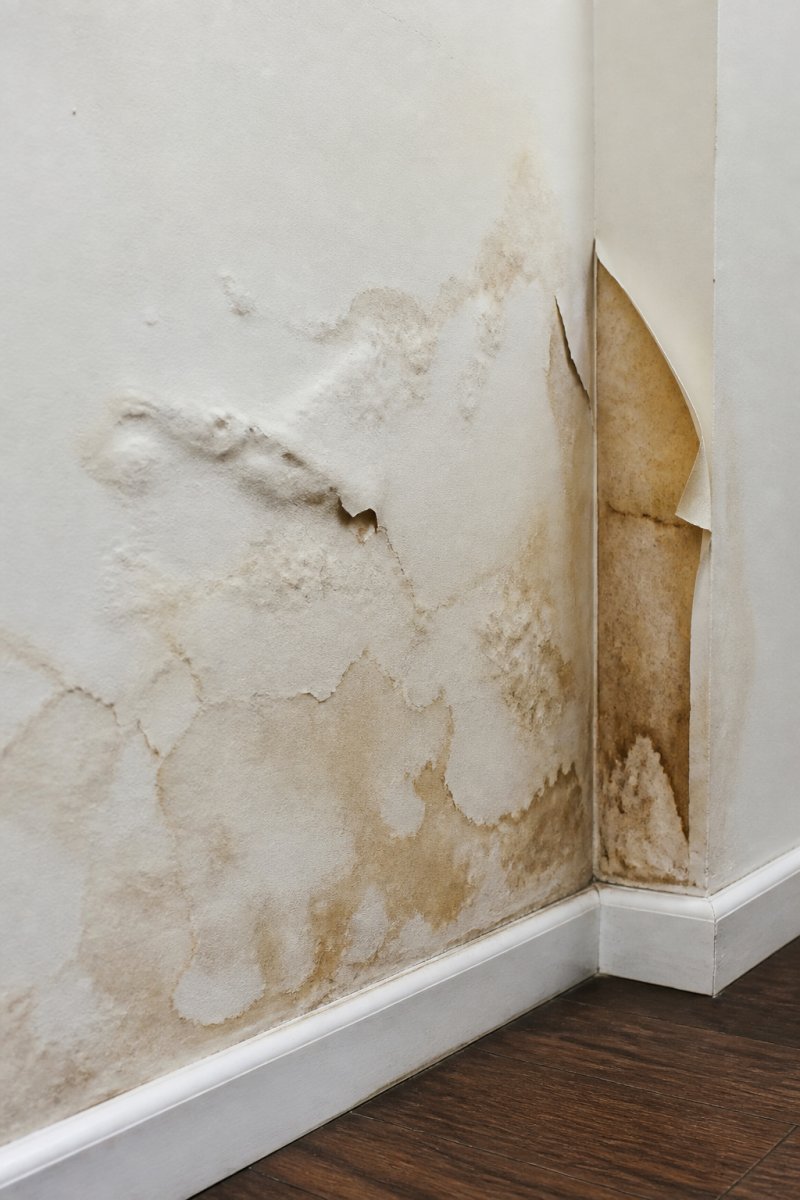
Visual indicators on walls and baseboards
Look for these visual warning signs of water leaks behind walls:
- Water stains, brown, yellow, or tan discolored patches on drywall or plaster
- Bubbling or blistering paint, paint that lifts away from the wall surface
- Peeling wallpaper, wallpaper that separates from the wall without cause
These signs mean water is moving through your wall cavity. Check corners, around windows, and below bathrooms first, these areas have the most plumbing and the highest water pressure.
Odors and moisture damage
Your nose is one of your best leak-detection tools. Water leaks behind walls create distinctive musty smells that grow stronger over time, meaning mold or mildew is already growing inside your wall cavity. Feel the wall with your hand: dampness means water is actively seeping through, cold spots can indicate flow behind the surface, and spongy drywall means advanced damage.
Conducting a Water Meter Test for Leaks
Your water meter is the most reliable tool you own for confirming a hidden leak. It measures every drop entering your home, so if it moves while nothing is running, water is escaping somewhere.
Before you start: shut off water-using appliances
A water meter test only works if nothing in the house is drawing water, including appliances you might not think of:
- Ice makers, many refrigerators cycle every few hours, pulling water even when the kitchen is quiet.
- Humidifiers and evaporative coolers, these can run continuously and consume water slowly.
- Water softeners, regeneration cycles often run overnight and can move the meter.
Step-by-step meter test
- Turn off all water inside and outside the home. Close every faucet, stop the washing machine and dishwasher, and disable irrigation timers.
- Locate your meter. In most single-family homes it sits in a concrete or plastic box near the curb or property line. You may need a screwdriver or meter key to open the lid.
- Identify the leak indicator. Most meters have a small triangular or gear-shaped dial that spins when even a tiny amount of water passes through, more sensitive than the main numeric display.
- Record the reading. Write down the full number, including decimals, and note whether the low-flow indicator is spinning.
- Wait 30 to 60 minutes with all water off. Do not flush toilets, run faucets, or start appliances.
- Read the meter again. If the numeric reading changed or the indicator moved, water is passing through the meter. Repeat the test to rule out a one-time appliance cycle.
Interpreting the results
- Meter still, indicator still: No water is moving through the meter. Any wall moisture is likely condensation, a roof or window leak, or a drain leak that only flows when fixtures are used.
- Meter moving, no visible leak outside: The leak is between the meter and your home, or inside the walls, the classic signature of a hidden supply-line leak.
- Meter moving only when a specific fixture runs: The leak is on that fixture's branch line, not the main.
What the meter test cannot tell you
The meter confirms water is escaping but cannot tell you where. A moving meter could mean a slab leak, an irrigation line break, or a supply pipe inside a wall. Once you have confirmed movement, isolate sections of the plumbing, usually by closing fixture shut-off valves one at a time, before calling a professional.
Listening and Smelling for Hidden Leaks
Your ears can detect leaks your eyes cannot see. Listen for these sounds in quiet moments:
- Dripping sounds, steady, rhythmic dripping from inside walls or ceilings
- Hissing or whistling, water spraying from a crack or pinhole in a pipe
- Running water, the sound of water flowing when no faucets are on
Press your ear against the wall near water stains, a leak often sounds like a faint drip or constant trickle. The smell of mold or mildew also grows stronger near active water leaks behind walls. Check during quiet times like early morning, with windows and doors closed.
Checking Your Water Bill for Unexplained Usage
Your water bill reveals hidden leaks that develop slowly over time. Compare your monthly usage to previous months, a sudden spike means water is going somewhere, and even small leaks waste hundreds of gallons per month.
Track these patterns:
- Bills that jump 20-30% with no explanation
- Consistent high usage even in winter months
- Increases that appear over two to three billing cycles
A pinhole leak can waste 250 gallons per day, 7,500 gallons a month. Request your usage history from your utility and graph the past year for unusually high months.
How Plumbers Detect Leaks Behind Walls
Professional leak detection uses technology to find hidden problems without tearing apart your home, pinpointing the exact location of water leaks behind walls.
Acoustic leak detection and thermal imaging
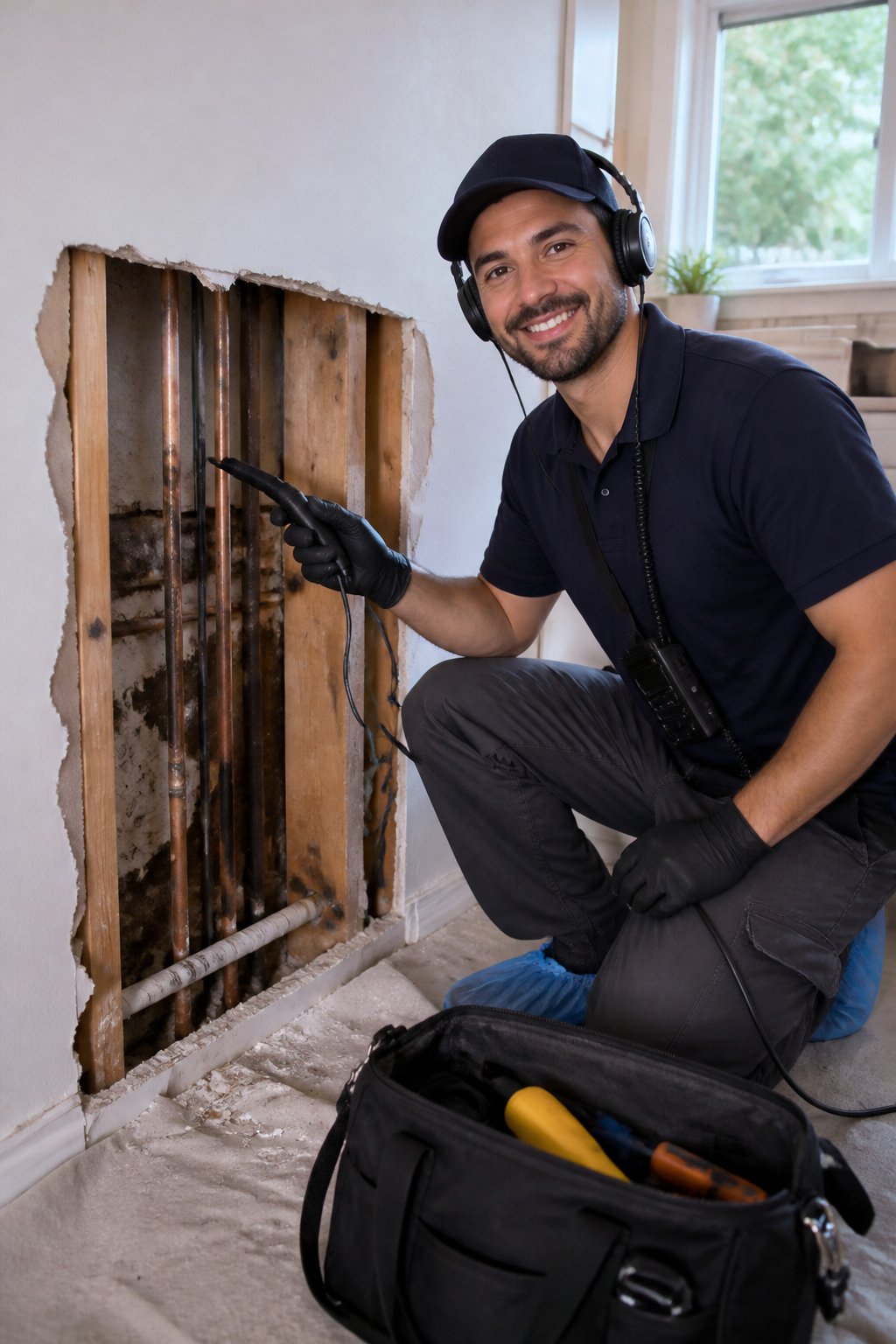
Acoustic leak detection uses sensitive microphones and electronic amplifiers to hear the sound water makes escaping from pressurized pipes, tracing it back to its source.
Thermal imaging cameras show temperature differences in your walls. Water flowing behind drywall is cooler than the surrounding wall, and cold spots on the thermal image pinpoint leak locations.
Both methods work without breaking walls or removing flooring, identifying the exact pipe section that's failing.
Video inspection and pressure testing
Video inspection feeds a tiny camera through your plumbing to show cracks, corrosion, and pinhole leaks in real time. Pressure testing applies controlled pressure while monitoring for drops, if pressure falls, water is escaping, and the rate of loss tells us how severe the leak is. Together these methods confirm location and severity, and whether the pipe can be repaired or replaced.
What to Do About a Leaking Pipe in a Wall
Finding a leak is the first step. Acting quickly prevents catastrophic damage.
Immediate actions to prevent water damage
Stop the water flow immediately.
If you can't locate the main shut-off, call a professional right away.
Document the damage with photos and video. Take close-ups of water stains, wet spots, and any visible mold.
Increase air circulation to dry out the area.
Contact your insurance company. Report the leak and the damage it caused.
When wall opening is necessary
Some leaks require opening the wall to access the damaged pipe, usually when the leak is severe or the pipe cannot be repaired from outside the wall. Wall opening removes drywall to expose the pipe and surrounding damage so we can see the full extent of the problem. After repair, we assess framing, insulation, and other materials; wet materials must be removed and replaced before the wall is sealed and finished.
Distinguishing Leaks from Condensation and Pipe Expansion
Not every damp wall, drip sound, or musty smell means a pipe is leaking. Condensation, pipe expansion, and drain-related moisture can produce nearly identical symptoms. Misreading them leads to unnecessary wall openings, or worse, ignoring a real leak. Use this decision tree to narrow it down before you call anyone.
Start with the meter test
The fastest way to separate a supply leak from everything else is the water meter test described above. If the meter moves with all water off, you have a supply-side leak. If the meter is still, the cause is almost certainly condensation, pipe expansion, or a drain leak.
Decision tree: what are you seeing?
Symptom: water droplets on pipes or fixtures, wall feels damp only sometimes
- Likely cause: condensation. Confirm by checking whether dampness appears during humid weather, after showers, or when the AC runs, condensation dries when humidity drops.
- Fix: insulate cold-water pipes, improve ventilation, run a dehumidifier.
Symptom: wall stays damp in dry weather, stains grow over weeks
- Likely cause: active leak. Confirm with the meter test and by watching whether the stain boundary expands.
- Fix: residential leak detection and repair.
Symptom: creaking, popping, or ticking sounds when hot water runs
- Likely cause: pipe expansion. Copper and PEX pipes expand and contract with temperature changes, and the sound is normal. If it tracks the hot-water cycle and stops when the water cools, it is expansion, not a leak.
- Fix: none required. If severe, pipe insulation or cushioned clamps can reduce it.
Symptom: hissing, dripping, or rushing sound that continues when no fixture is running
- Likely cause: pressurized supply leak. Confirm with the meter test.
- Fix: residential leak detection and repair.
Symptom: musty smell that gets stronger after showers or rain
- Likely cause: a drain leak, a roof or window leak, or a supply leak. Rain correlation points to the building envelope, not plumbing.
- Confirm by checking the meter (rules out supply), inspecting the attic or ceiling above (rules out roof), and looking for loose toilet or tub seals (rules out drain).
Condensation: the most common false alarm
Condensation forms when warm, humid air meets a cold surface. In summer, cold-water pipes sweat. In winter, warm interior air meets cold exterior walls. Bathrooms, kitchens, and laundry rooms are the usual suspects.
Signs that point to condensation rather than a leak:
- Dampness appears only in humid weather or after water use.
- The wall dries completely within a day or two.
- No stain ring or discoloration develops.
Pipe expansion: noisy but harmless
Copper and PEX supply lines expand when hot water flows through them. The movement against framing creates ticking, creaking, or popping sounds. This is normal plumbing behavior, not a defect. The key difference from a leak is that expansion noise stops when the water stops and the pipe cools, while a leak continues to hiss or drip as long as the line is pressurized.
Drain leaks: the sneaky middle case
A drain leak only flows when a fixture is used, so the meter test will not catch it. Look for stains below bathrooms, kitchens, or laundry rooms that reappear after use. A loose toilet wax ring, a cracked tub drain, or a failed shower pan can all leak into a wall or ceiling cavity without moving the meter.
When the decision tree is inconclusive
Some cases genuinely overlap. A slow supply leak can coexist with condensation, and a drain leak can saturate a wall enough that the meter eventually shows movement from a running toilet. If you have worked through the tree and still cannot isolate the cause, that is the point to bring in a professional.
Next Steps: Getting Professional Help
If you suspect a water leak behind walls in your home, professional diagnosis is the safest approach.
California Leak Detection Specialists uses advanced detection technology to find leaks without guesswork, pinpointing the exact location and severity and providing clear reports with photos and recommendations.
Contact us at (951) 278-8999 to schedule a leak detection appointment. Our licensed, bonded, and insured team ensures the work is done right the first time.
Frequently Asked Questions
What are the most common signs of a water leak behind a wall?
Water stains, discolored patches, bubbling or peeling paint, soft or warped drywall, and musty odors are the most visible indicators. Baseboards may also show signs of dampness, swelling, or discoloration. If you notice any of these signs, a hidden leak is likely present in your wall cavity. The sooner you identify and address it, the less structural damage and mold growth you'll face.
How do I perform a water meter test to find a hidden leak?
Turn off all water-using appliances and fixtures inside your home. Locate your water meter and record the reading. Wait 30 minutes without using any water, then check the meter again. If the reading has increased, you have a leak. Note the exact increase, this helps plumbers understand the severity. If the meter shows movement even with no water in use, the leak is likely in your main line or behind walls.
How do plumbers detect leaks behind walls without tearing everything apart?
Professional plumbers use acoustic detection to listen for the sound of water escaping under pressure, thermal imaging to spot temperature changes in wall cavities, and video inspection equipment to examine pipes directly. Pressure testing helps confirm the location and severity. These non-invasive methods pinpoint the exact leak source, minimizing the need for unnecessary wall opening and keeping repair costs lower.
Should I turn off my water if I suspect a leak behind a wall?
Yes, if you've confirmed a leak through water meter testing or visible water damage, turn off the main water supply immediately to stop additional water from entering your walls. This limits structural damage and mold growth. However, if you're still investigating, keep water on so a plumber can use acoustic or pressure testing to locate the source. After diagnosis, your plumber will advise whether to keep the water off during repair.
Water damage escalates quickly once a leak starts. The sooner you find and fix the problem, the less damage your home suffers. California Leak Detection Specialists specializes in residential leak detection with minimal disruption. We use proven methods to locate hidden leaks and guide you through repairs and insurance claims with confidence and transparency.