 how-to
Why Plumbing Insurance Claims Get Delayed
Table of Contents
- Why Plumbing Insurance Claims Get Delayed
- Missing or Incomplete Water Damage Claim Documentation
- Coverage Disputes: Wear and Tear vs. Sudden Pipe Failure
- The Water Damage Claim Timeline: What to Expect
- How to Create a Plumbing Leak Detection Report for Insurance
- When Your Insurance Adjuster Is Not Responding
- Preventing Secondary Damage While Your Claim Is Pending
- Conclusion
- Frequently Asked Questions
Last Updated: October 17, 2026
Why Plumbing Insurance Claims Get Delayed
Insurance claims for plumbing damage can take weeks or months to resolve, frustrating homeowners who need repairs done quickly. Understanding why these delays happen helps you move your claim forward.
Why plumbing insurance claims get delayed comes down to a few core issues. Missing documentation tops the list, followed by disputes over what's covered versus wear and tear. The investigation itself can also stall if your adjuster is overwhelmed or communication breaks down.
At California Leak Detection Specialists, we work with homeowners navigating these delays every day. Claims move quickly when the right documentation is in place from the start, and good claims get denied when the evidence doesn't clearly show what caused the loss.
The good news: most delays are preventable. You control several factors that speed up the process.
Missing or Incomplete Water Damage Claim Documentation
The single biggest reason insurance claims get delayed is incomplete paperwork.
1. Plumber's Report and Invoice A detailed report from a licensed plumber is the cornerstone of your claim. It should include:
- Date and time of inspection
- Description of the leak location (e.g., "burst copper pipe under slab at 8 feet from foundation wall")
- Cause of failure (e.g., "freeze damage," "corrosion," "manufacturing defect")
- Photos of the damaged pipe and leak site
- Repair recommendations and estimated costs
- Plumber's license number and contact information
2. Source-of-Leak Findings If the leak source is hidden (e.g., under slab or behind walls), a leak detection report from a specialist is critical.
3. Photos and Videos Take photos and videos before you clean up or make repairs. Capture:
- Wide shots of the affected area
- Close-ups of the damaged pipe, fittings, and surrounding materials
- Water stains on drywall, flooring, and personal property
- Any mold growth (if present)
- The source of the leak (if visible)
4. Invoices and Receipts Keep receipts for:
- Emergency plumbing repairs
- Water extraction and drying equipment rentals
- Supplies used for mitigation (fans, dehumidifiers, towels)
- Any temporary repairs to prevent further damage
5. Damaged Materials If safe and practical, keep samples of damaged materials (e.g., a section of burst pipe, damaged drywall).
6. Mitigation Records Document all steps you took to prevent further damage, including:
- Date and time you discovered the leak
- Actions taken (e.g., "turned off main water valve at 2:15 PM")
- Equipment used (e.g., "rented two dehumidifiers from Home Depot")
- Receipts for mitigation services
7. Proof of Loss Form Most insurers require a sworn proof of loss statement, which lists the amount you're claiming and includes supporting documentation.
8. Policy and Declarations Page Include a copy of your policy and the declarations page to help the adjuster verify coverage and limits.
9. Timeline of Events Write a chronological narrative of when you discovered the leak, who you called, and what actions you took.
10. Contractor Estimates Get itemized estimates from licensed contractors for the repairs. The estimates should separate labor and materials and include photos or diagrams if possible.
Many homeowners skip this step: they call a plumber, get the leak fixed, then file a claim.
Include all of this material upfront when you file. Providing complete documentation from day one cuts weeks off the timeline.
Coverage Disputes: Wear and Tear vs. Sudden Pipe Failure
Insurance covers sudden, accidental water damage. It does not cover gradual leaks from poor maintenance or aging pipes.
This distinction causes many claim denials and delays, since your insurer must determine whether the damage came from a sudden pipe failure or wear and tear over time.
Sudden pipe failure happens without warning. A pipe bursts in freezing weather. A connection fails under normal pressure. These events are typically covered.
Wear and tear develops slowly. A pipe corrodes over years. A joint slowly loosens. These are not covered because they result from lack of maintenance.
Determining which one caused your damage takes investigation time. An adjuster may request a plumbing inspection, and if your plumber and the adjuster disagree about whether the failure was sudden or gradual, the claim stalls while they debate.
This is where professional documentation matters. A detailed plumbing leak detection report identifying the exact cause of failure, corrosion, manufacturing defect, freeze damage, pressure spike, helps the adjuster decide faster and removes guesswork.
The Water Damage Claim Timeline: What to Expect
Understanding the normal timeline helps you spot when your claim is genuinely delayed versus progressing at the expected pace.
Stage 1: First Notice of Loss (Day 1) You discover the leak and report it to your insurer. Most insurers allow you to file online or by phone.
Stage 2: Adjuster Assignment and Initial Contact (Days 2-5) The insurer assigns an adjuster, who should contact you within a few business days to schedule an inspection. Common delay: Adjuster caseloads.
Stage 3: Inspection and Documentation (Days 5-10) The adjuster visits to inspect the damage, take photos, and gather information, and may request a plumbing inspection report to determine the cause. Common delay: Incomplete documentation.
Stage 5: Repair Estimate and Scope Agreement (Days 15-25) You submit repair estimates from licensed contractors, and the adjuster reviews them and may negotiate scope. Common delay: Disagreement on scope.
Stage 6: Payment Issuance (Days 20-30) Once coverage and scope are agreed, the insurer issues payment. Common delay: Missing paperwork.
Most straightforward plumbing claims resolve in 3-4 weeks; complex claims with coverage disputes can take 6-8 weeks or longer.
How to Create a Plumbing Leak Detection Report for Insurance
A professional plumbing leak detection report is one of the strongest tools you can give your insurer, documenting the cause of the leak, the scope of damage, and repair recommendations in one clear package.
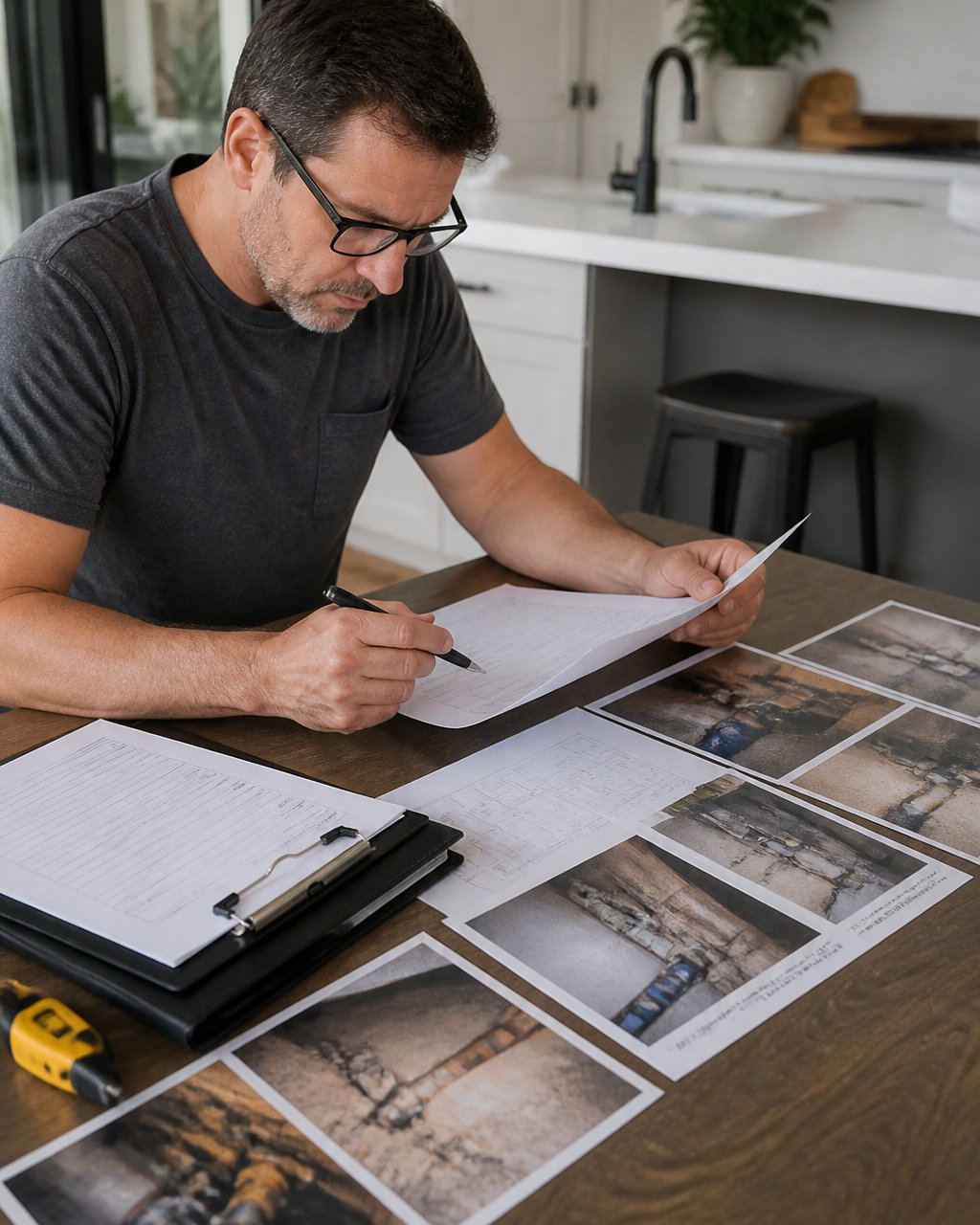
Here's what a solid report includes:
- Date and time of inspection
- Property address and policy number
- Description of the leak location (e.g., "burst copper pipe under slab at 8 feet from foundation wall")
- Cause of failure (e.g., "freeze damage," "corrosion," "manufacturing defect")
- Photos of the damaged pipe, the leak site, and surrounding water damage
- Measurements of affected areas (square footage of wet drywall, flooring, etc.)
- Timeline of when the leak started and when it was discovered
- Repair recommendations with estimated costs
- Inspector credentials (license number, company name, contact information)
When you work with California Leak Detection Specialists, we provide all of this documentation as part of our service, detailed enough to satisfy adjusters and clear enough that homeowners understand exactly what we found.
The key is specificity. Generic reports saying "there is water damage" don't help. Detailed reports, "one-inch copper pipe fractured at fitting due to freeze damage, affecting 120 square feet of drywall and flooring in the master bedroom", give the adjuster exactly what they need.
When Your Insurance Adjuster Is Not Responding
Communication delays are among the most frustrating parts of the claims process. You file a claim, then hear nothing for days or weeks.
This happens for a few reasons:
- High caseload: Adjusters often manage 50-100 claims at once
- Scheduling delays: Finding a time that works for inspection can take days
- Incomplete information: If your initial report was vague, the adjuster may be waiting for clarification
- Waiting on third parties: Your adjuster may be waiting for repair estimates or other documentation before moving forward
If your adjuster hasn't responded in 5-7 business days, it's time to follow up. Here's how:
Call your adjuster directly. Leave a voicemail with your claim number, a brief description of your issue, and a request for a callback within 24 hours.
Send an email. Include your claim number, the date you filed, and specific questions about next steps. Written communication creates a record if you need to escalate later.
Contact the claims department. If your adjuster doesn't respond within 3 days of your follow-up, call the main claims line and ask to speak with a supervisor. Explain that you've been unable to reach your assigned adjuster and need help moving the claim forward.
File a complaint with your state insurance commissioner. If communication remains impossible after 10 days, file a formal complaint. Most states have an insurance commissioner's office that investigates complaints, and a complaint often gets the insurer's attention fast.
The goal is not to be aggressive, it's to be persistent and documented. Adjusters respond faster when they know you're tracking the timeline and following up professionally.
Preventing Secondary Damage While Your Claim Is Pending
While your claim is processed, water damage can get worse, mold grows, wood rots, drywall deteriorates, turning a manageable loss into a catastrophic one.
Your insurance policy requires you to take "reasonable steps" to prevent additional damage. This is called mitigation. It protects both you and your insurer.
Here's what you should do immediately after discovering a leak:
- Stop the water source. Turn off the main water valve if the leak is severe
- Remove standing water. Use pumps, wet/dry vacuums, or towels to extract water
- Dry the area. Run fans and dehumidifiers to remove moisture
- Remove damaged materials (if safe to do so), wet drywall, carpet, and insulation should be removed to prevent mold
- Document all mitigation efforts with photos and receipts
Keep every receipt for emergency mitigation supplies and services. These costs are often covered by your insurance policy as part of the claim. Your adjuster needs to see that you acted responsibly to prevent further damage.
Do not delay mitigation while waiting for approval. The longer you wait, the more damage occurs, and the harder it becomes to prove what the original leak caused versus your delay.
Conclusion
Insurance delays on plumbing claims don't have to derail your recovery. Most stem from missing documentation, unclear communication, or coverage disputes that the right approach upfront could have prevented.
Gather complete documentation the moment you discover a leak, get a professional plumbing inspection that clearly identifies the cause of failure, follow up consistently with your adjuster, and take mitigation steps immediately. Do these things and your claim moves faster.
If you're dealing with a plumbing leak and need professional documentation to support your insurance claim, California Leak Detection Specialists can help. We provide detailed inspection reports, clear cause-of-loss documentation, and direct communication with your insurance adjuster. Our licensed team specializes in the documentation that insurers need to approve claims quickly. Call (951) 278-8999 to schedule an inspection and get your claim moving.
Frequently Asked Questions
How long does a water damage insurance claim usually take?
Most insurance companies aim to process water damage claims within 30 days of receiving complete documentation. However, plumbing-related claims often take 45 to 90 days due to investigation delays, adjuster scheduling, and the need for repair estimates. If your claim involves determining whether damage resulted from sudden pipe failure or gradual leakage, the timeline extends further. Request a specific timeline from your insurance company in writing when you file.
What documents help prevent a plumbing insurance claim delay?
Submit photos and video of all visible water damage, repair estimates from licensed plumbers, proof of the leak's discovery date, your policy details, a detailed description of what happened, and receipts for emergency mitigation efforts. A professional plumbing leak detection report with clear findings about the cause of loss is especially valuable. The more complete your initial submission, the fewer follow-up requests your insurer will make, which directly reduces delay.
What should I do if an insurance adjuster ignores me?
Document every attempt to contact your adjuster with dates and times. Send follow-up requests by email so you have a written record. If no response comes within 5 business days, call the insurance company's main line and ask for a supervisor or claims manager. Reference your claim number and the date of your last contact. If delays continue beyond a reasonable timeframe, contact your state's Department of Insurance to file a complaint about unresponsive claim handling.
Can an insurer deny a claim because a plumbing leak was gradual?
Yes. Most homeowner's insurance policies exclude damage from gradual leaks, wear and tear, and poor maintenance. However, sudden and accidental pipe failure, such as a burst water line or frozen pipe that ruptures, is typically covered. The distinction matters enormously for your claim. A professional plumbing inspection can often determine whether the damage resulted from sudden failure or slow deterioration, which is why a detailed leak detection report strengthens your case significantly.