 How-to
Can a Camera Find Pipe Leaks in Your Home?
Last Updated: November 7, 2026
Quick Summary
A camera can help you find pipe leaks, but it usually points to a likely location rather than proving one. Thermal cameras detect surface temperature patterns near pipe routes, while sewer cameras show cracks and damage inside drain lines. Confirming the leak requires a professional verification step.
- A thermal camera reads surface temperature, not the water itself.
- Look for repeating patterns that follow a known pipe route, not single spots.
- Sewer cameras show physical damage like cracks and root intrusion in drain lines.
- Control the home's temperature and avoid direct sunlight before scanning.
- Confirm any suspected leak with a professional before opening walls or floors.
Table of Contents
- How a Camera Helps Find Pipe Leaks
- Can a Thermal Camera Detect Water Leaks Behind Walls?
- Step-by-Step: Scanning a Home for Likely Leaks
- Sewer Camera Inspection for Leaks in Drain Lines
- How Plumbers Find Underground Pipe Leaks
- Camera Inspection for Bathroom Pipe Leaks
- Confirming a Leak and Deciding Your Next Step
- Frequently Asked Questions
Learning how to find pipe leaks inside a wall, under a floor or beneath a slab is hard. Most homeowners only notice the damage after the stain appears, the floor softens or the water bill jumps. A camera can help locate a likely leak, but only when you understand what the camera actually shows. This guide from California Leak Detection Specialists explains where cameras help, where they fall short, and how to decide what to do next.
How a Camera Helps Find Pipe Leaks
A camera does not see water flowing out of a pipe. It helps you find signs that point toward a leak. The two main tools are thermal (infrared) cameras and sewer cameras, and each one answers a different question.
A thermal camera detects surface temperature differences. Water that escapes a hot-water line can warm or cool the materials around it, which can leave a pattern the camera picks up. A sewer camera is different. It travels inside a drain line and shows cracks, separated joints, roots or other physical damage that can let water escape.
Neither tool proves a leak on its own. Think of the camera as a way to narrow down where to look. Confirming the leak takes a second step, which we cover later in this guide.
Can a Thermal Camera Detect Water Leaks Behind Walls?
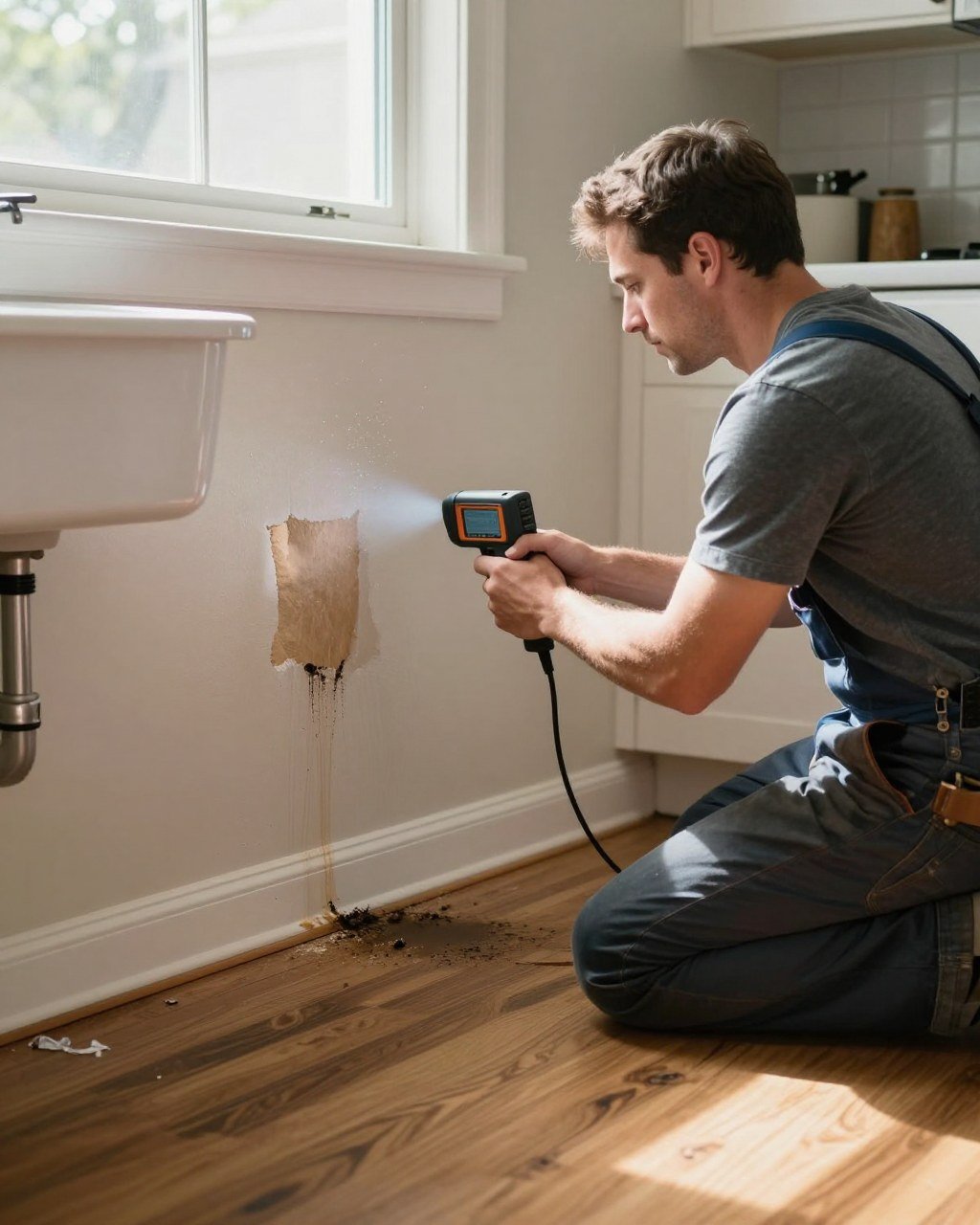
Often it can help, but only as a clue. A thermal camera can show unusual temperature patterns on a wall or floor surface. Those patterns may point toward a possible water problem behind the surface.
The limit matters. Walls, insulation and building materials all affect how heat moves through a space. A warm or cool spot can also come from sunlight, an appliance, a draft or the way a room was built. Treat any pattern as a reason to investigate further, not as proof.
Why a Thermal Camera Shows Temperature, Not Water
A thermal camera reads heat, not moisture. It does not see the water itself. It measures temperature differences on a surface and displays them as colors or shades.
This is why a camera can miss a leak entirely. If the water is cold, or if the surface temperature around the pipe stays steady, the camera may show nothing useful. Some leaks produce a clear pattern and others produce almost none. That is why a clean scan does not always mean there is no leak.
Reading Cold Spots, Warm Spots and Moisture Patterns
Look for patterns, not single spots. Cold spots can suggest moisture, especially when they appear in a repeating or linear shape.
Compare what you see with what you know about the home:
- Where the pipes run. Follow the likely route of supply and drain lines.
- Whether the pattern repeats. A consistent shape across several scans is worth more than one image.
- Whether other signs match. Look for damp drywall, musty smells, soft flooring or unexplained water use.
- Whether a heat source explains it. Sunlight, a water heater or a vent may create the same pattern.
Step-by-Step: Scanning a Home for Likely Leaks
A thermal scan is only as good as the conditions you create before you start. Use this protocol to gather evidence, then confirm with a professional before opening any wall or floor.
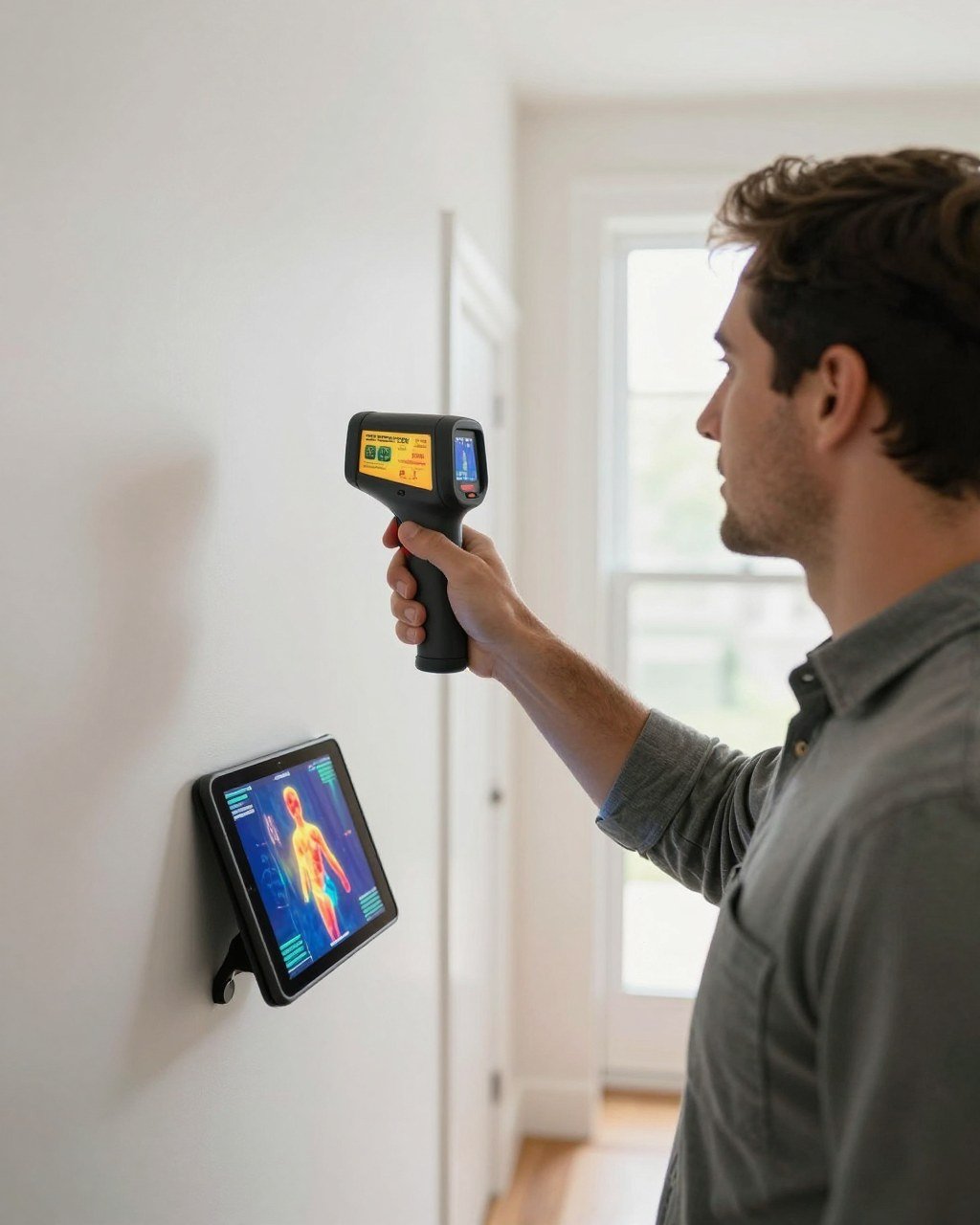
Before You Scan: Control the Conditions
- Stabilize the home's temperature. Turn off space heaters, close exterior doors and windows, and let the interior settle for at least two hours. A steady baseline makes temperature anomalies easier to spot.
- Eliminate solar gain. Scan walls and ceilings that are not in direct sunlight. South- and west-facing surfaces can stay warm for hours after sunset, creating false warm spots.
- Know your pipe routes. Sketch the likely path of supply lines from the water heater and fixtures, and note where drain lines run. A pattern that follows a known pipe route is far more meaningful than a random spot.
- Set your camera's emissivity and reflected temperature. Check your camera's manual for the correct emissivity value for the surface you are scanning.
The Scanning Protocol
- Start with a wide pass. Hold the camera about 3 to 5 feet from the surface and sweep slowly across each wall or floor section. Keep the camera perpendicular to the surface. A quick sweep blurs the image and can miss small patterns.
- Switch to a narrow pass on any anomaly. When you see a temperature difference, move closer (12 to 18 inches) and scan the area in a tight grid pattern, overlapping each pass by about half the camera's field of view.
- Compare hot and cold spots against the baseline. Note the temperature of the anomaly and the surrounding surface. A difference of 2 to 5°F is often enough to warrant a closer look, but the pattern matters more than the absolute number.
- Run water and re-scan. Turn on the hot water at the nearest fixture and let it run for 5 to 10 minutes. Re-scan the same area. A pattern that grows or changes shape when hot water flows is a stronger clue than a static spot.
- Record everything. Save each image with the room name, surface, time, and camera settings. Label the image with the temperature range shown. This documentation helps a professional verify your findings and supports any insurance claim.
After the Scan: What to Do with Your Results
A thermal image is a lead, not a diagnosis. If you find a pattern that follows a pipe route and matches other signs (damp drywall, musty odor, unexplained water bill increase), call a professional for verification. Do not cut into walls or floors based on a scan alone.
Watch out: A thermal camera can show a convincing pattern from a duct leak, a recessed light, or a poorly insulated exterior wall. Always cross-check with a moisture meter or a plumber's acoustic listening tool before authorizing any demolition.
Sewer Camera Inspection for Leaks in Drain Lines
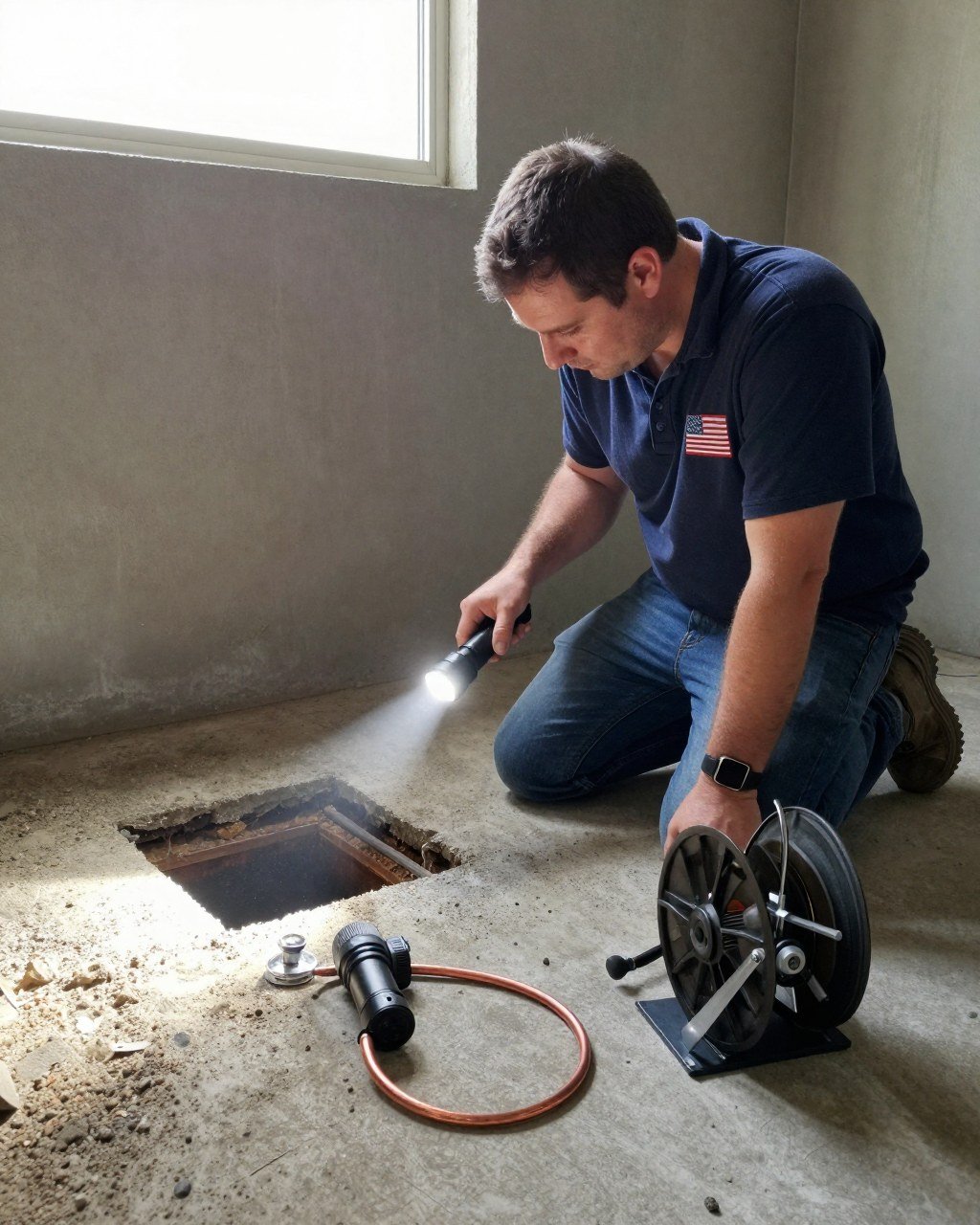
A sewer camera is the right tool when you suspect a drain line is leaking. The camera is fed into the pipe through a cleanout or an access point, and it records the inside of the line as it moves.
The camera can show cracks, offset joints, root intrusion and other damage. These problems can let wastewater escape into the soil around the pipe. The camera records what it finds, so you can see the exact location and condition of the damage.
Keep the limit in mind. A sewer camera shows physical damage, but it does not prove that water is leaking out. Pipe damage can be present without an active leak. Pressure testing can help confirm whether the line is actually losing water.
How Plumbers Find Underground Pipe Leaks
Underground leaks are harder to find because you cannot see the pipe. Professionals usually work from clues first, then narrow the search.
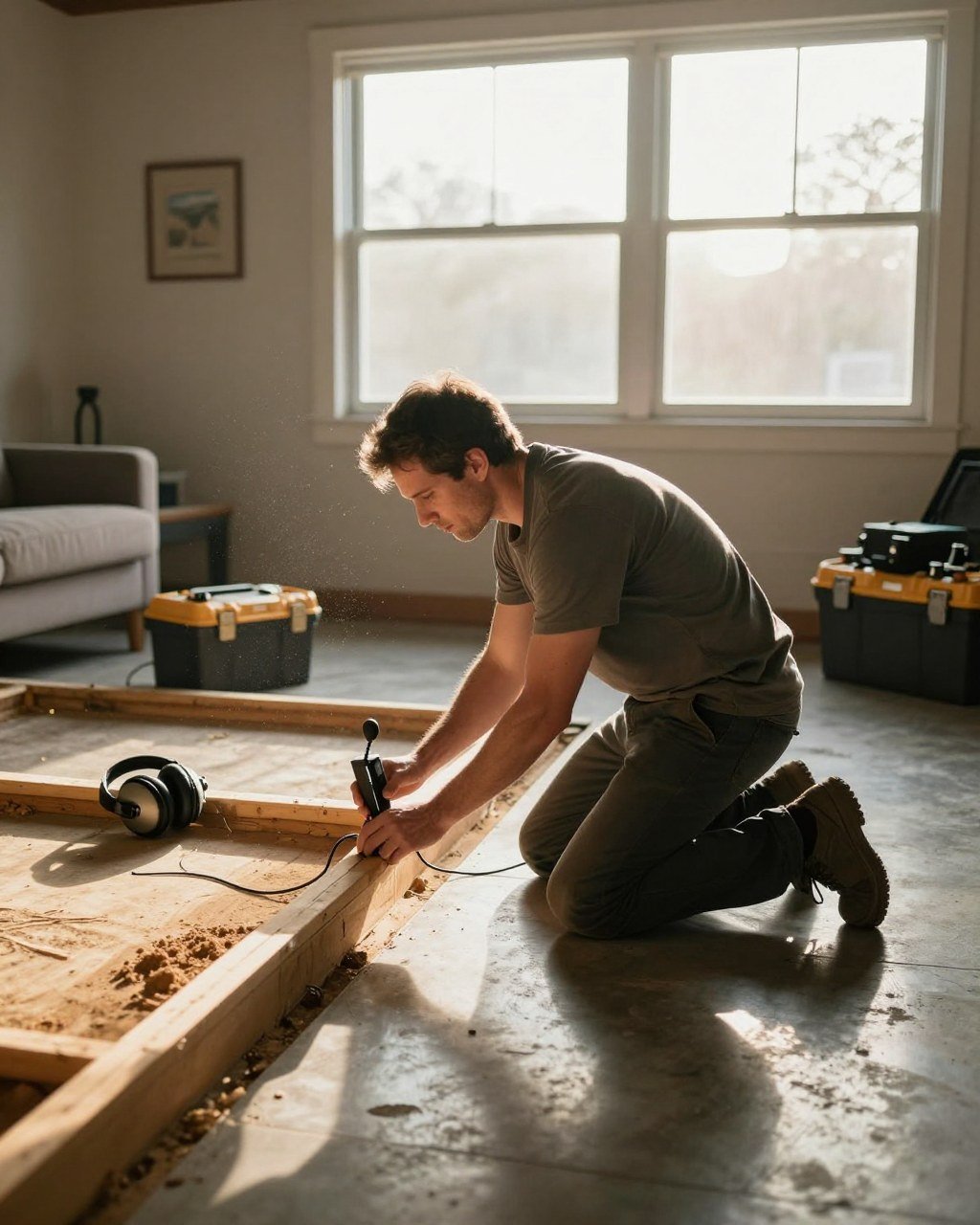
Underground leaks are often located by working from clues, using tools such as acoustic listening and thermal scanning, with pressure testing used to help confirm the line is losing water.
Each step gives a clue, not a final answer. A combination of methods gives a more reliable result than any single tool. This layered approach also helps avoid digging up more of the property than necessary.
Camera Inspection for Bathroom Pipe Leaks
Bathrooms have many connections in a small space, which makes leaks easy to miss. Supply lines feed the toilet, sink and shower, while drain lines carry wastewater away. A leak in any of these can hide behind tile, cabinets or walls.
A thermal scan can help check walls and floors around these fixtures. A sewer camera can check the drain lines serving the bathroom. If you notice a soft spot in the floor, a stain on a ceiling below the bathroom or a rise in water use, a bathroom leak is worth investigating.
Pay attention to how the problem changes. A leak that appears only when the shower runs points to the supply side. A slow drain or gurgling sound points to a drain issue. Describe these patterns clearly when you call a professional, because they help narrow the search.
The table below sums up which tool to reach for depending on where a suspected leak sits, using the methods covered above.
| Method | Best for | Key limit |
|---|---|---|
| Thermal camera | Walls and floors near pipe routes | Shows heat, not water |
| Sewer camera | Drain lines and cracked joints | Shows damage, not active leaks |
| Acoustic listening | Underground supply lines | Works from clues only |
| Pressure test | Confirming a line is losing water | Needs a professional setup |
Confirming a Leak and Deciding Your Next Step
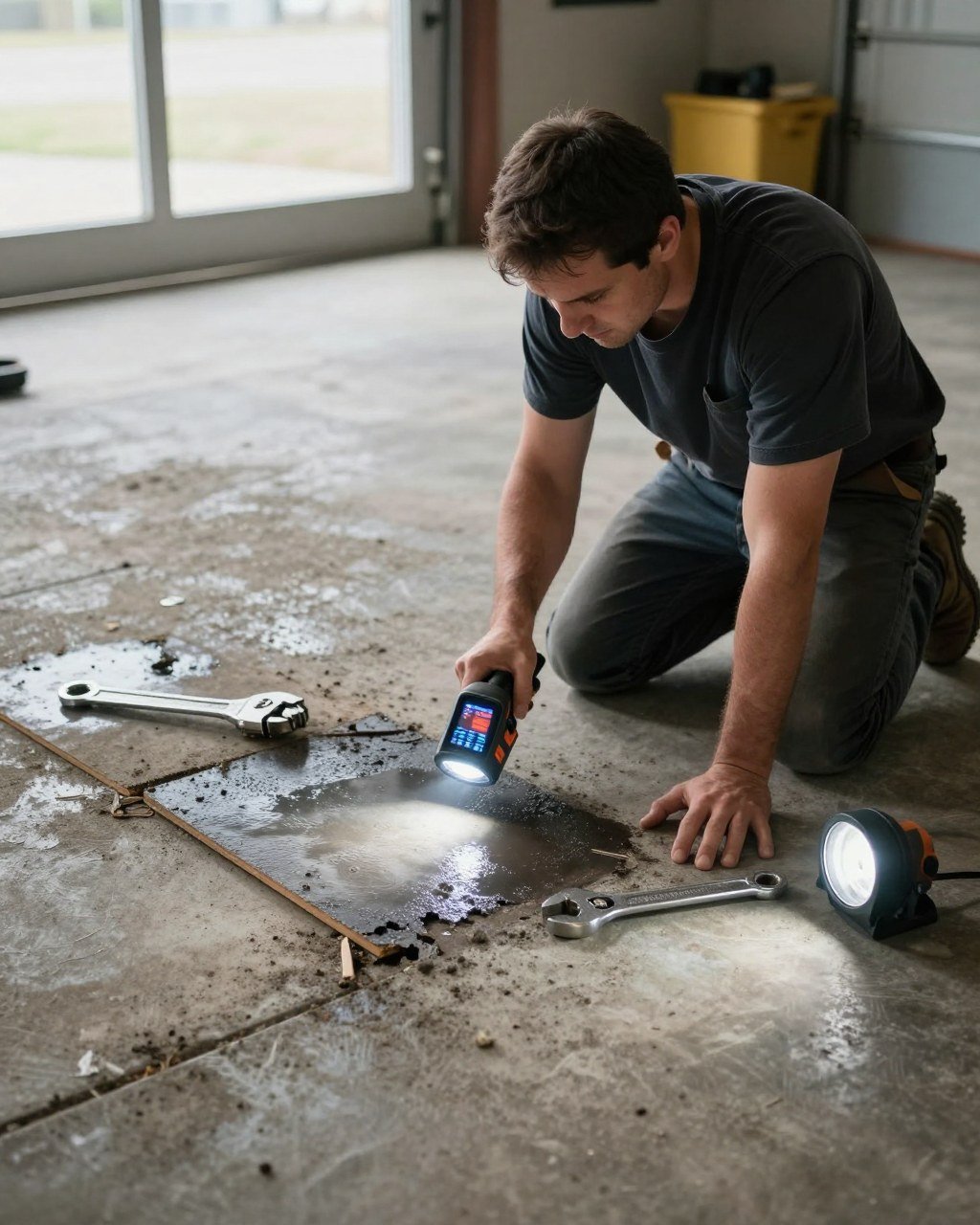
A camera result is a lead, not a diagnosis. Before you open walls or dig, confirm the leak. Leak detection often combines several methods to verify where water is escaping.
If you are dealing with a suspected slab leak, professional slab leak detection in Corona, CA can help confirm the source and provide clear documentation. Once the leak is confirmed, a professional slab leak inspection can help you plan the next step.
Here is a simple way to decide what to do:
- Gather your clues. Keep your scan images, notes and any water bill changes.
- Check for active signs. Note damp areas, odors or unexplained water use.
- Get a confirmed location. Do not open walls until a professional verifies the source.
- Plan the repair. Ask for written findings you can share with a contractor or insurer.
If you want a broader view of local options first, a guide to water leak detection services in Corona can help you compare what is available. For leaks behind walls, our step-by-step guide to finding water leaks behind walls goes deeper into the methods above.
Our team at California Leak Detection Specialists focuses on residential work, and provides clear reports, photos, and repair information that can support an insurance claim. Call (951) 278-8999 to talk through what you are seeing.
Frequently Asked Questions
What device can detect a pipe leak?
No single device finds every pipe leak. Thermal cameras can reveal temperature patterns that may point to a hidden leak, moisture meters can measure dampness in materials, and acoustic listening tools can pick up the sound of escaping water. A camera can help narrow down where to look, but a thermal image is an indirect indicator rather than a direct view of water. Confirming a leak usually requires combining methods and, for buried or hard-to-reach lines, a pressure test performed by a licensed professional.
Can a thermal camera detect a leak behind a wall?
A thermal camera can sometimes show a pattern that suggests a leak behind a wall, because water can change the surface temperature of building materials. However, the camera detects temperature differences, not moisture itself. Normal variations from sunlight, drafts, insulation gaps and appliances can produce similar patterns, so an unusual reading is a reason to investigate further, not proof of a leak. Confirmation typically requires additional testing.
Can a sewer camera find a leak in a pipe?
A sewer camera can locate physical damage such as cracks, offset joints, root intrusion and corrosion in drain lines, and those defects are often associated with leakage. The camera shows the damage but does not by itself prove that water is escaping. A hydrostatic or pressure test is generally the more reliable way to verify whether a drain line is leaking, and the inspection footage can document where repairs may be needed.
When should you call a plumber for a suspected hidden leak?
Call a licensed plumber if you notice a sustained rise in your water bill without explanation, damp or warm spots on floors, a musty smell, peeling paint or soft flooring, or the sound of running water when all fixtures are off. Hidden leaks can cause damage over time, so an early professional inspection can help confirm the source before walls or slabs are opened. Ask for written findings and photos if you may need documentation for an insurance claim.