 How-to
How to Book a Professional Slab Leak Inspection
Last Updated: November 4, 2026
Quick Summary
A slab leak inspection is a professional check for hidden water leaks under a concrete slab, and it is worth booking once you notice rising water bills, warm floor spots, damp carpet, or sounds of running water with every fixture off. Preparing a meter log and clearing access to the suspected area helps the technician work faster.
- A water bill that climbs without any change in household habits is a clear signal of a hidden leak.
- Record your water meter reading at the same time each morning over two to three weeks.
- Avoid using water for at least an hour before the technician arrives.
- Shut off the main valve and call for emergency service if a known active leak is causing damage.
- Confirm the company is licensed and insured and ask how findings will be documented.
Table of Contents
- Signs of a Slab Leak That Justify Booking an Inspection
- How to Prepare Before You Book a Slab Leak Inspection
- What to Expect During Leak Detection at Your Home
- Questions to Ask a Leak Detection Company Before You Book
- Pricing and What Affects a Slab Leak Inspection Quote
- Preparing Slab Leak Insurance Claim Documentation
- Booking Your Residential Slab Leak Inspection
- Frequently Asked Questions
Signs of a Slab Leak That Justify Booking an Inspection
Hidden water leaks under a concrete slab often reveal themselves long before you see a puddle. Booking a professional inspection is worth considering once you notice any of the warning signs below.
A water bill that climbs without any change in your household's habits is one of the clearest signals. Warm spots on bare floors, especially in one area, can point to a hot water line running beneath the slab. Damp carpet, soft or bubbling flooring, and a musty odor that won't go away are also common indicators.
Other signs include the sound of running water when every fixture is off, cracks forming in tile or drywall near floor level, and water pressure that drops without explanation. Any one of these is reason enough to schedule an inspection rather than waiting to see whether the problem worsens.
How to Prepare Before You Book a Slab Leak Inspection
Preparation makes the visit faster and gives the technician better information to work with. Start by writing down the symptoms you've noticed, when they started, and which rooms are affected. A simple log of your water meter readings over two or three weeks is especially useful. Record the reading at the same time each day (for example, every morning before any water use) and note any changes. This log helps the technician distinguish between a constant leak and one that only appears when certain fixtures are used.
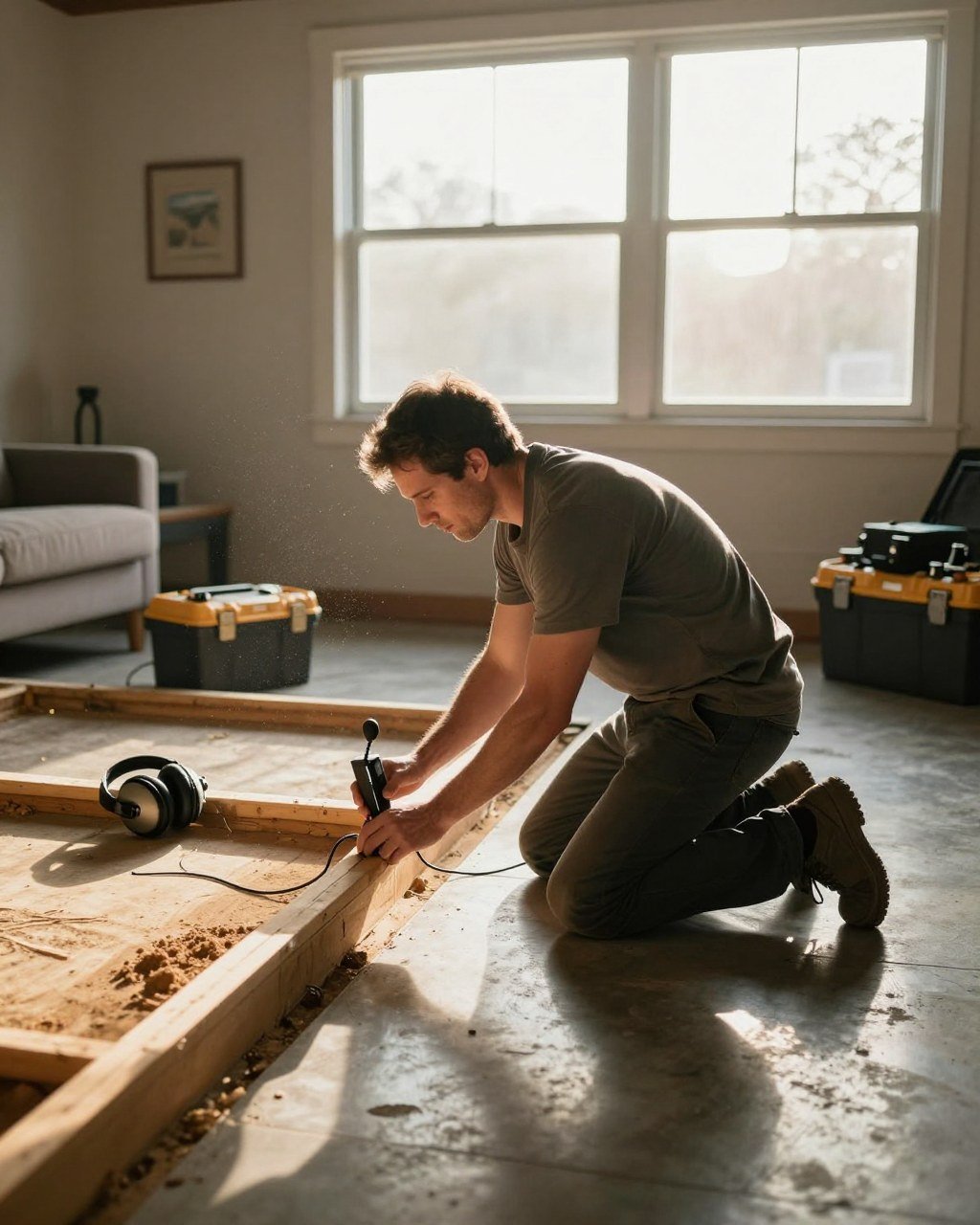
Next, clear access to the areas in question. Move furniture, rugs, and stored items away from the suspected spot. If the suspected leak is under a carpeted floor, roll back the carpet and padding in that area if it can be done safely; this allows the technician to use thermal imaging or electronic listening equipment directly on the slab. For tile or hardwood floors, you do not need to remove the flooring, the technician's equipment can often detect leaks through the material, but clearing the area of objects is still necessary. Also note where your main water shutoff valve is located, and make sure the path to it is clear. The technician may need to shut off the water during testing, and quick access saves time.
Gather any prior plumbing records, repair invoices, or insurance paperwork you have. Previous repairs can help a technician understand the history of the system. If you have had a previous slab leak repaired, note the location and the method used (e.g., spot repair, rerouting, or pipe replacement). This information can indicate whether the current problem is related to the earlier repair or is a new issue.
On the day of the inspection, avoid using water for at least an hour before the technician arrives if possible. This includes running the dishwasher, doing laundry, or taking showers. A period of no water use allows the technician to establish a baseline for listening equipment and pressure tests. Also, make a list of questions you want to ask, such as whether the inspection includes a written report, what detection methods will be used, and whether the company offers repairs or only detection. Having these questions ready ensures you get the information you need to make decisions.
Watch out: If you have a known active leak that is causing significant water damage (e.g., water pooling on the floor or water staining on walls), do not wait for a scheduled inspection, shut off the main water valve and call for emergency service. Most residential leak detection companies offer same-day or emergency appointments for active leaks.
What to Expect During Leak Detection at Your Home
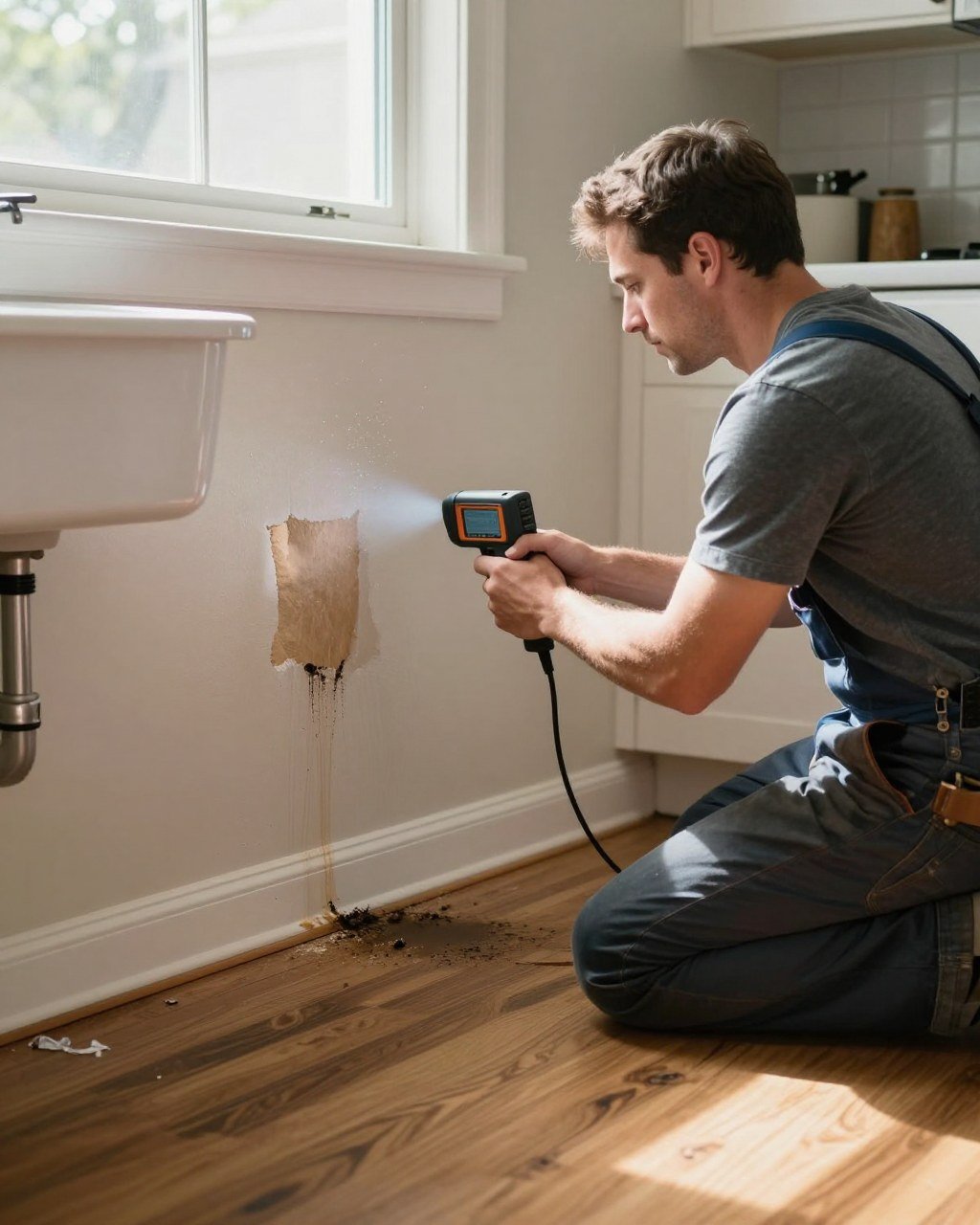
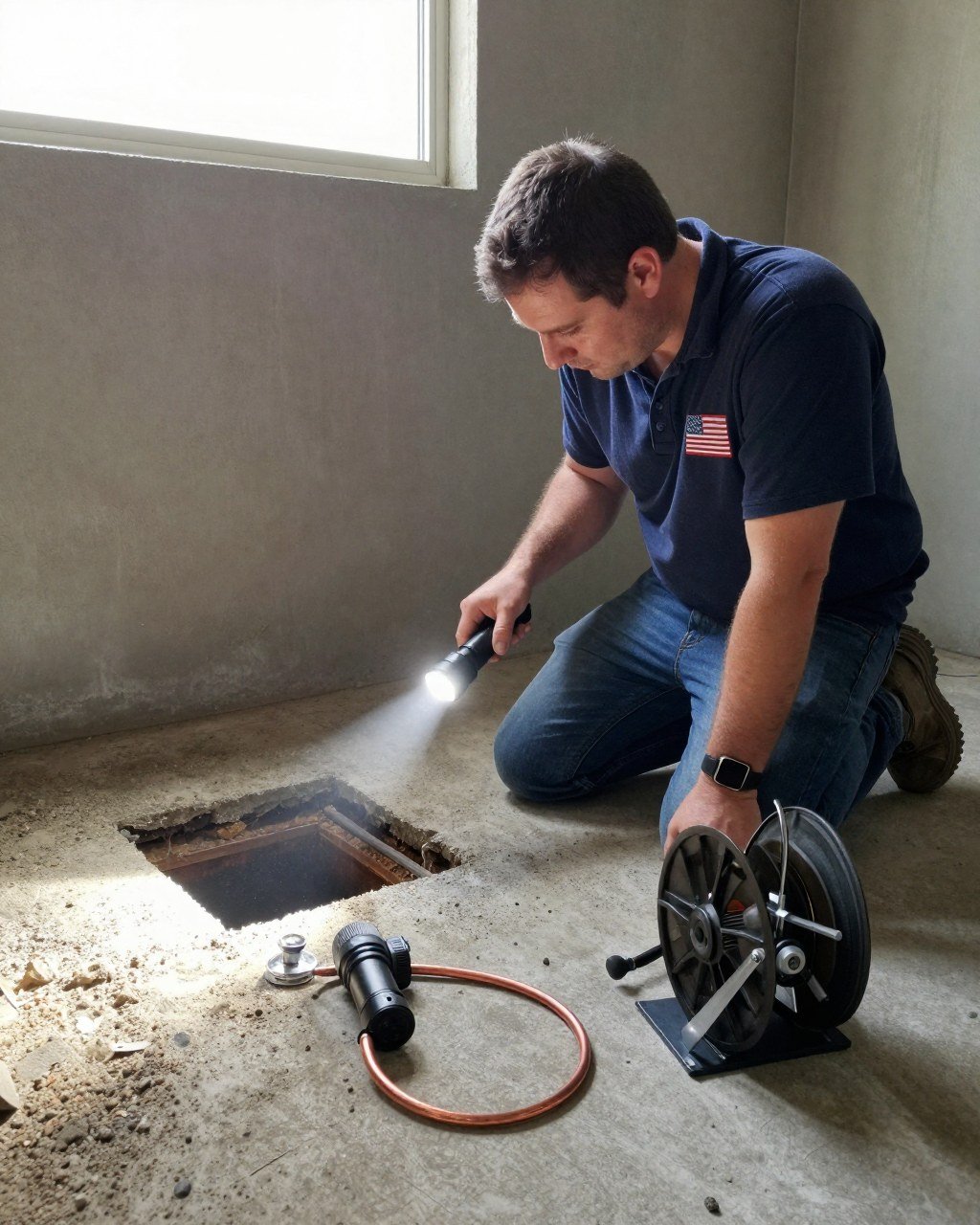
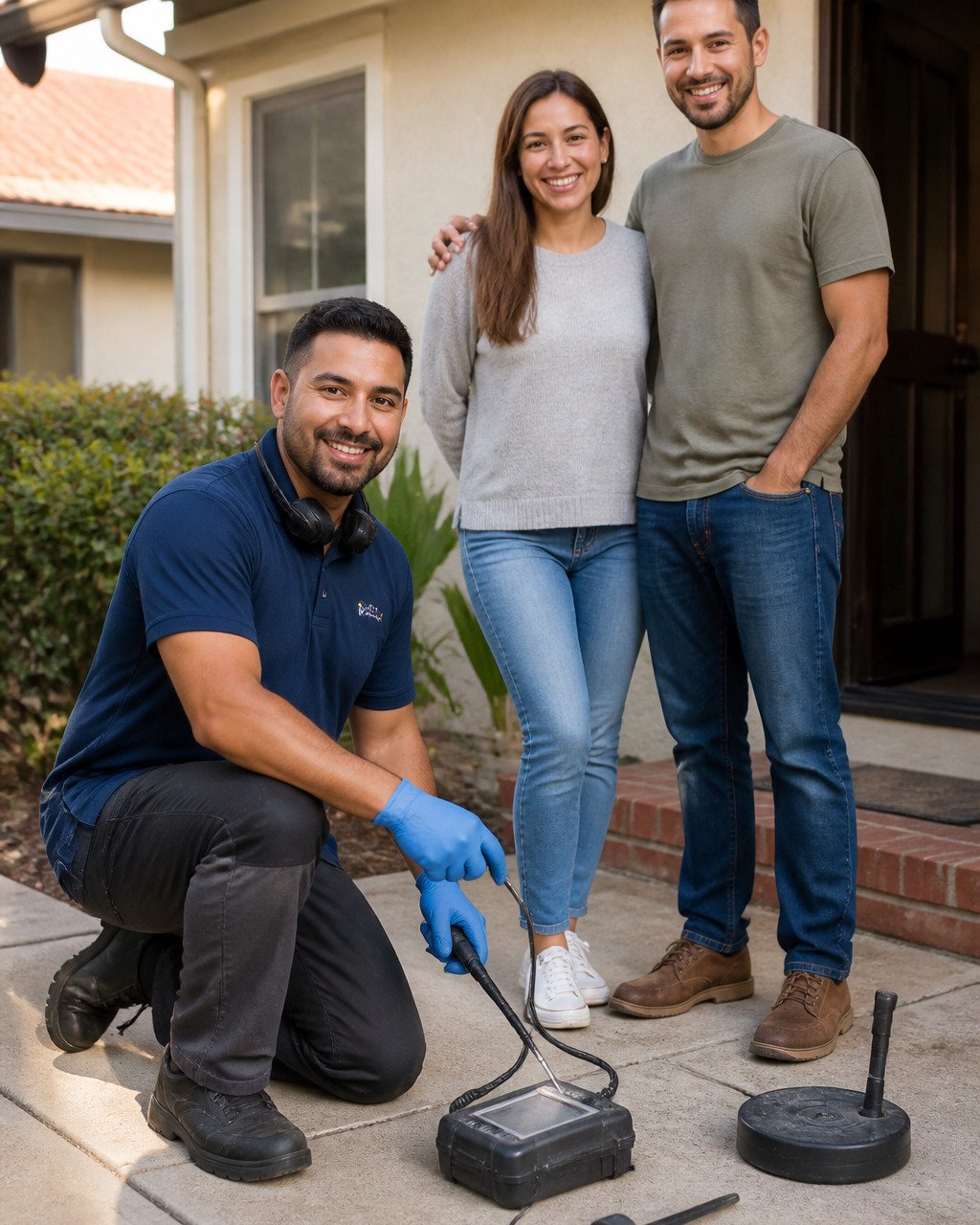
A licensed plumber in work clothes kneeling beside a residential kitchen floor with a handheld leak detection device, while the homeowner watches nearby. The goal of the visit is accurate diagnosis, so you know exactly what is happening before any repair decisions are made.

Questions to Ask a Leak Detection Company Before You Book
Before scheduling, ask whether the company is licensed and insured, and request the license number so you can verify it. Ask what detection methods they plan to use and whether those methods avoid unnecessary demolition of your floors.
Also ask how the findings will be documented. Clear reports with photos and written explanations are valuable, especially if you plan to file an insurance claim. You should also ask whether you are obligated to use the same company for repairs or whether you can get competing estimates after the diagnosis.
Finally, confirm the expected length of the visit. To see what an emergency plumbing leak detection service includes and how it is delivered, read our emergency plumbing leak detection overview. Knowing the timeline helps you plan your day and set expectations about disruption to your home.
Pricing and What Affects a Slab Leak Inspection Quote
Inspection pricing depends on factors such as the size of the property, how many areas need testing, the detection methods required, and whether the visit includes a written report. For current pricing, visit California Leak Detection Specialists' website or call (951) 278-8999 for a quote based on your situation.
When comparing quotes, look at what each one includes. A lower price may not cover documentation, photos, or repair recommendations. Ask each company to itemize its services so you can compare them accurately. Specifically, ask these questions:
- Is the diagnostic fee separate from the inspection fee, or is it a single charge?
- Does the quote include a written report with photos and findings?
- If a leak is confirmed, is any portion of the inspection fee credited toward the repair if you choose that company to do the work?
- Are there additional charges for using multiple detection methods (e.g., electronic listening plus thermal imaging plus pressure testing)?
- Is there a fee for after-hours or weekend appointments?
Ask each company upfront whether its inspection fee is credited toward a repair if you hire it for the work.
Factors that typically increase the quote include: the size of the home (larger homes take longer to inspect), the number of suspected leak locations, the need for specialized equipment like acoustic listening devices or infrared cameras, and the complexity of accessing the slab (e.g., under tile, hardwood, or carpet). Homes with a history of multiple leaks or prior repairs may also require more extensive testing.
Watch out: Confirm whether the company provides the written findings before any repair contract is signed, and whether the inspection fee is refundable if no leak is found.
Preparing Slab Leak Insurance Claim Documentation
If you plan to file a claim, documentation matters. Insurers often request clear evidence of the cause and extent of the damage. Keep photos of affected areas, copies of water bills, and any written findings from the inspection.
California Leak Detection Specialists provides reports, photos, and repair information to support claim paperwork. Ask your insurer what documentation it requires before the inspection so you can make sure the report covers those points.
For more on documenting water damage, read our guide on 7 Ways to Document Water Damage for Insurance Claims.
Booking Your Residential Slab Leak Inspection
Once you've noticed warning signs, prepared your home, and reviewed your questions, you're ready to schedule. Call California Leak Detection Specialists at (951) 278-8999 to book a residential slab leak inspection in Corona. Their licensed (CSLB #741886), bonded, and insured team can locate the source of the problem with minimal disruption to your home.
Frequently Asked Questions
How long does a slab leak inspection take?
A residential slab leak inspection usually takes one visit, and the length depends on the home's size, how many areas need testing, and whether the suspected leak is easy to locate. Ask the company for an estimated time when you book so you can plan around work schedules and whether you need someone home. If the inspection finds a leak, the repair scope is usually a separate conversation and may require a new appointment.
What information should I have ready when booking a slab leak inspection?
Have your property address, a description of the symptoms you have noticed, such as warm spots on floors, damp carpet, a sudden rise in water bills, or the sound of running water when fixtures are off. Note when the symptoms started and where they appear in the home. If you have an insurance claim or an open policy, have your insurance carrier name and claim number ready. Also note any past plumbing repairs, the age of the home, and whether you have access to the areas the technician will need to check.
Will insurance pay for a slab leak inspection?
Coverage depends on your policy, the cause of the damage, and the insurer's terms. Many homeowner policies cover sudden and accidental water discharge, but they often exclude gradual leaks, wear, and corrosion, and the rules vary by carrier. Before booking, call your insurer to ask what is covered and whether they require a specific type of documentation. Keep the inspection report, photos, and invoices so you can share them with your adjuster if you file a claim.