 How-to
7 Steps to Water Leak Detection Services in Corona
Last Updated: November 1, 2026
Quick Summary
Professional water leak detection in Corona starts with a water meter test, then uses isolation testing, acoustic listening, and pressure or dye testing to confirm one location before any concrete is opened. We handle residential leak detection and the repair that follows, and you are not obligated to use us for the repair.
- Run a free water meter test first: shut off all water, wait 20 to 30 minutes, and recheck the meter.
- A still meter does not rule out drain or sewer leaks, which never register on a water meter.
- Acoustic listening works best on pressurized supply leaks but struggles with deep slab leaks.
- Ask what is included in the service call and what would trigger an additional charge.
- Re-run the meter test after repair and watch the area for a week for returning moisture.
Table of Contents
- Start With a Water Meter Leak Test Before You Call Anyone
- Hidden Water Leak Signs That Point to a Slab or Line Problem
- What Slab Leak Detection Actually Involves in a Corona Home
- How Professional Water Leak Detection Services Find the Source
- What Drives the Cost of Water Leak Detection Services
- Water Leak Insurance Documentation You Need Before Repairs Begin
- Stopping Water Damage and Verifying the Repair
- Book a Residential Leak Inspection With California Leak Detection Specialists
- Frequently Asked Questions
Start With a Water Meter Leak Test Before You Call Anyone
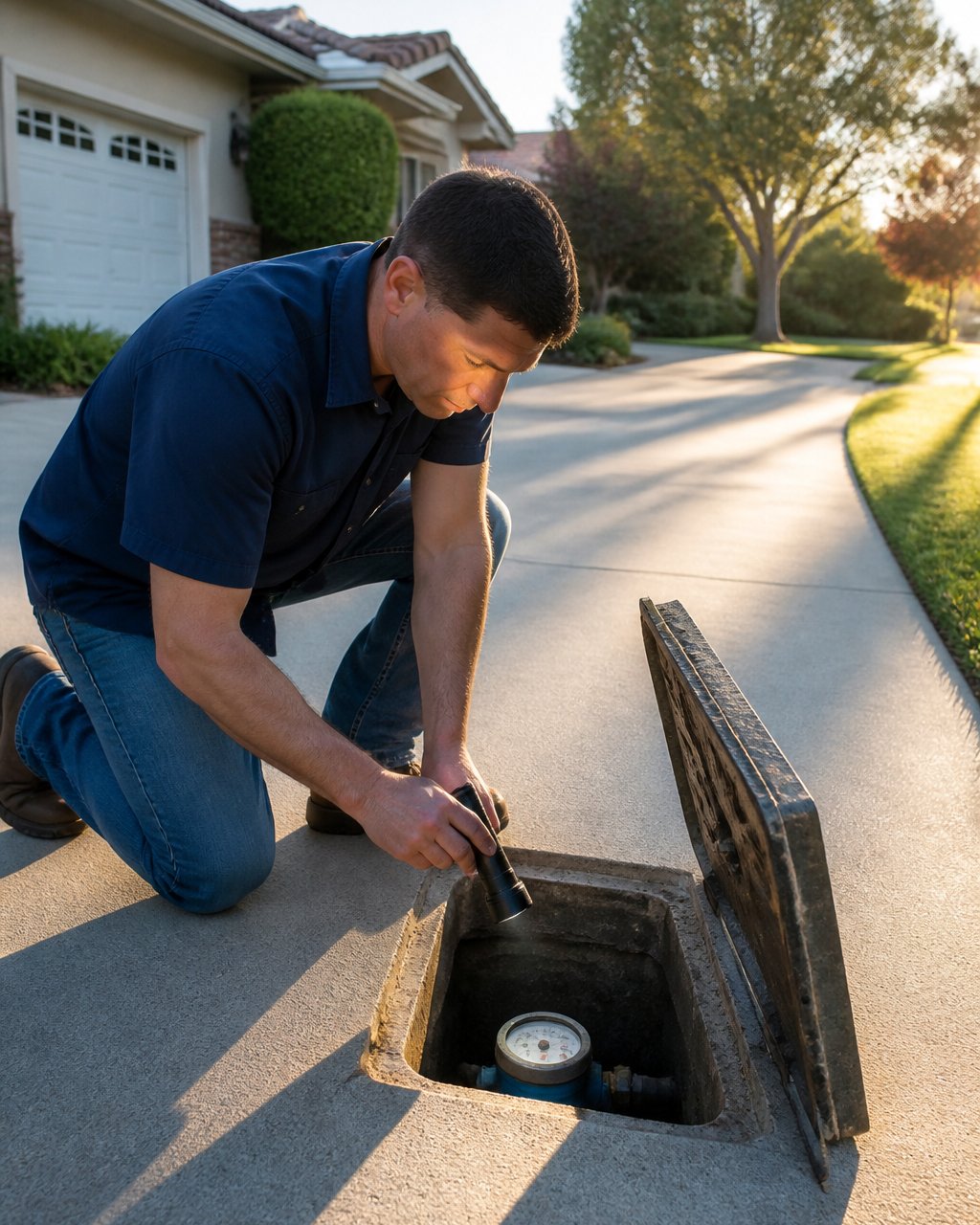
A water meter leak test is the fastest way to confirm you have a hidden leak, and it costs nothing but ten minutes. The City of Corona tells residents they can use their own water meter to check for leaks, and that leaks and broken sprinklers must be fixed in a timely manner, per City of Corona water rules and tips. At California Leak Detection Specialists, we walk homeowners through this test first because it separates a real supply-line problem from a running toilet or an irrigation timer.
Here is how to run it:
- Shut off every fixture, faucet, and appliance that uses water
- Confirm the irrigation controller is off, not just paused
- Find your meter box, usually near the curb or side yard
A moving meter with everything off points to a leak on the pressurized side of your plumbing. A still meter does not clear you completely, because drain and sewer leaks do not register on a water meter, a homeowner can pass the meter test and still have water pooling under a slab.
Hidden Water Leak Signs That Point to a Slab or Line Problem
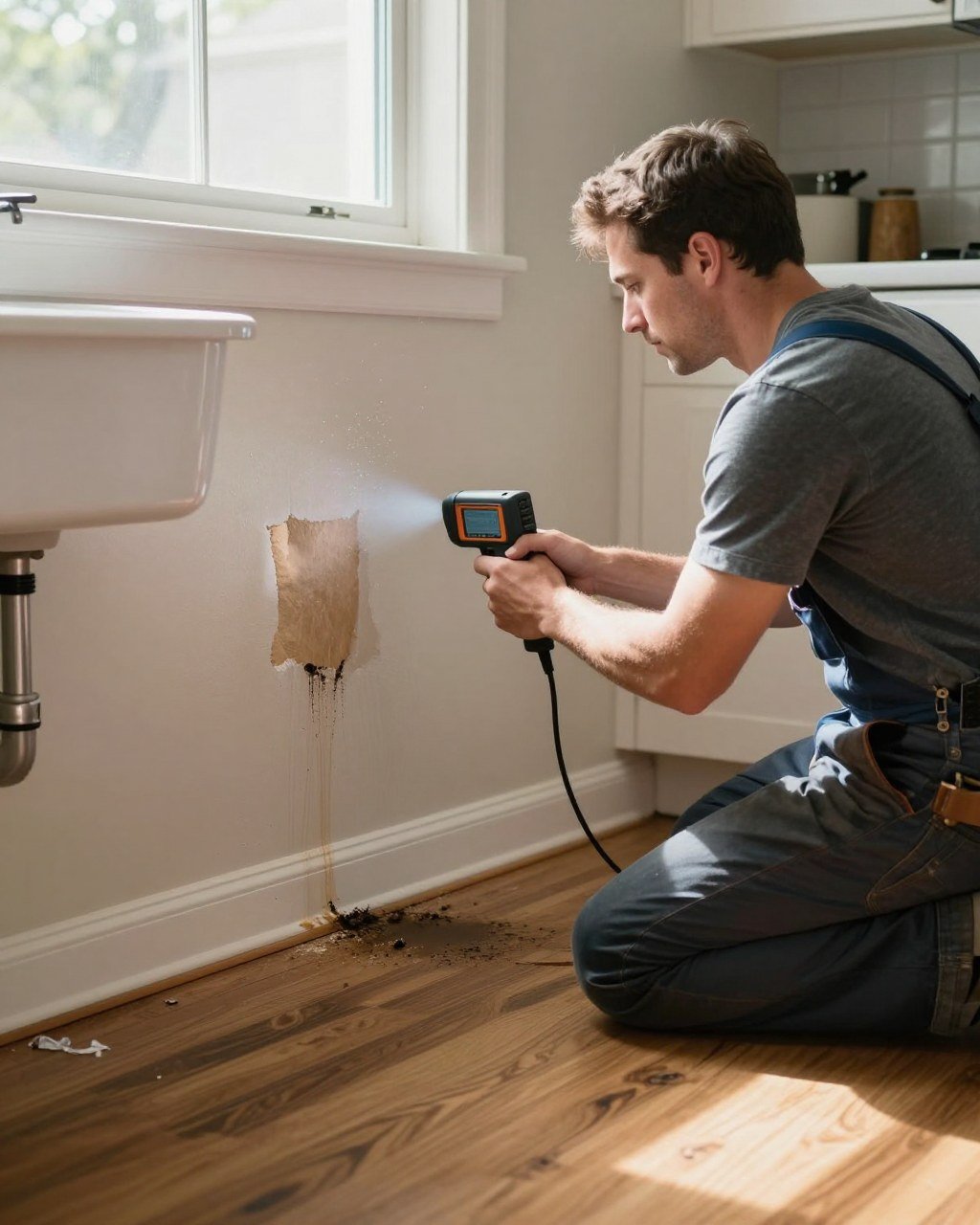
Hidden water leak signs show up as evidence you did not cause: sound, warmth, moisture, and a bill that stops matching your habits. A hot spot on the floor is one of the most reliable indicators of a slab leak on the hot-water line.
Watch for these signals:
- The sound of running water when nothing is on
- A water bill that climbs without a change in household use
- Warm patches on tile or carpet, or a floor that never fully dries
One caution: a slab leak and a sewer line problem can produce overlapping symptoms. For a fuller symptom list, see our guide on signs of hidden water leaks under slab.
What Slab Leak Detection Actually Involves in a Corona Home
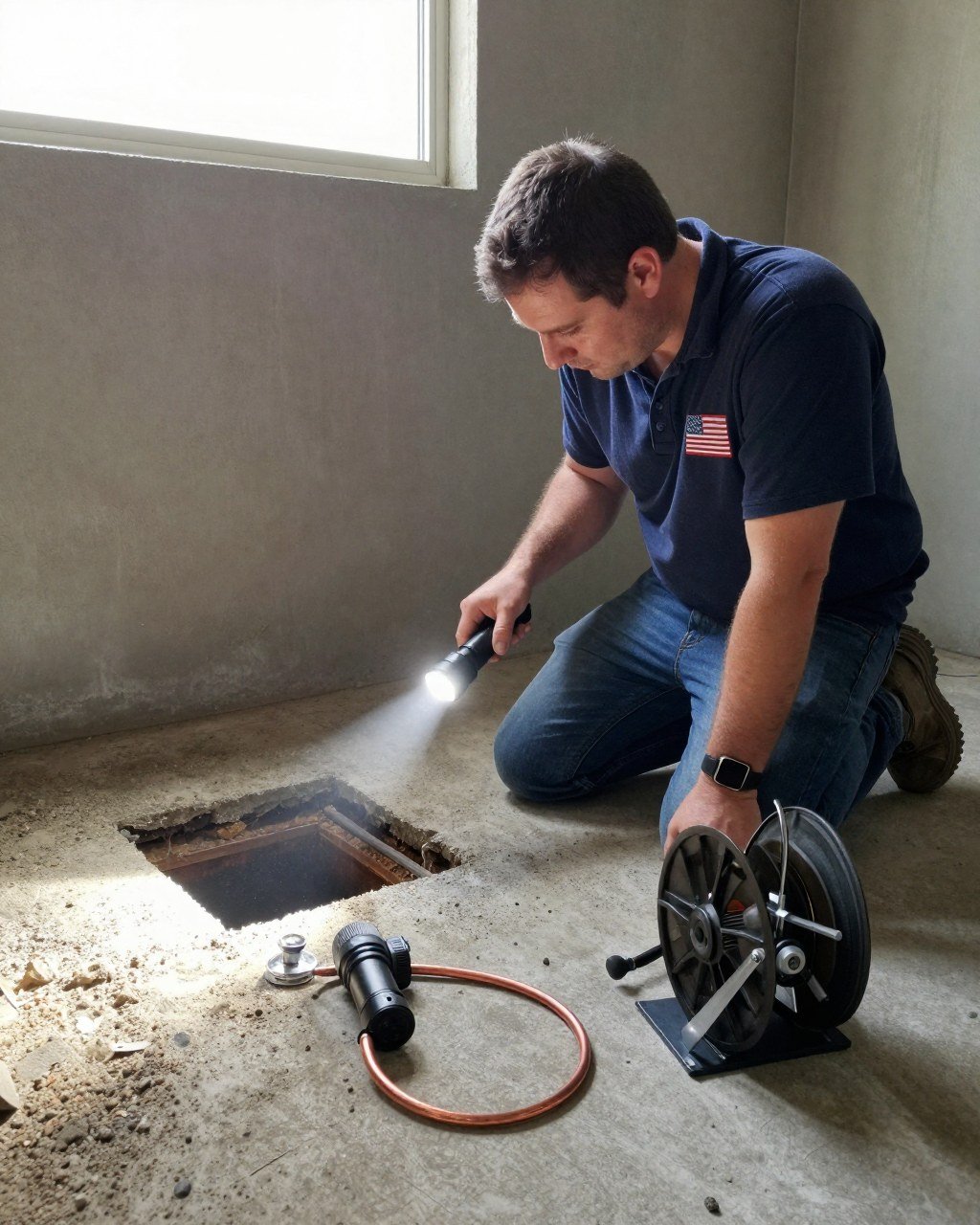
Slab leak detection is the process of locating a leak beneath a concrete foundation without breaking the slab open to search for it.
The work starts above ground. We map the plumbing layout, isolate the hot and cold systems, and confirm whether the loss is on the pressurized supply, the drain system, or the pool loop.
If the idea of opening a floor worries you, that concern is reasonable. Our guide on how to detect slab leaks without destruction explains the noninvasive methods in detail.
How Professional Water Leak Detection Services Find the Source
Professional water leak detection services find the source by combining listening equipment, pressure isolation, and confirmation testing, then correlating the results until only one location fits. No single tool is decisive on its own.
What most homeowners never see is the order of operations. A professional inspection is a process of elimination, and the sequence matters as much as the tools.
Step 1: Interview and System Mapping
The technician starts by asking what you have noticed: when the bill climbed, where you hear water, which rooms feel damp, whether the problem is worse after showers or laundry. They then map the plumbing layout, identify the shutoff valves, and note the pool loop, irrigation zones, and water heater location, which tells them which systems to isolate first.
Step 2: Isolation Testing
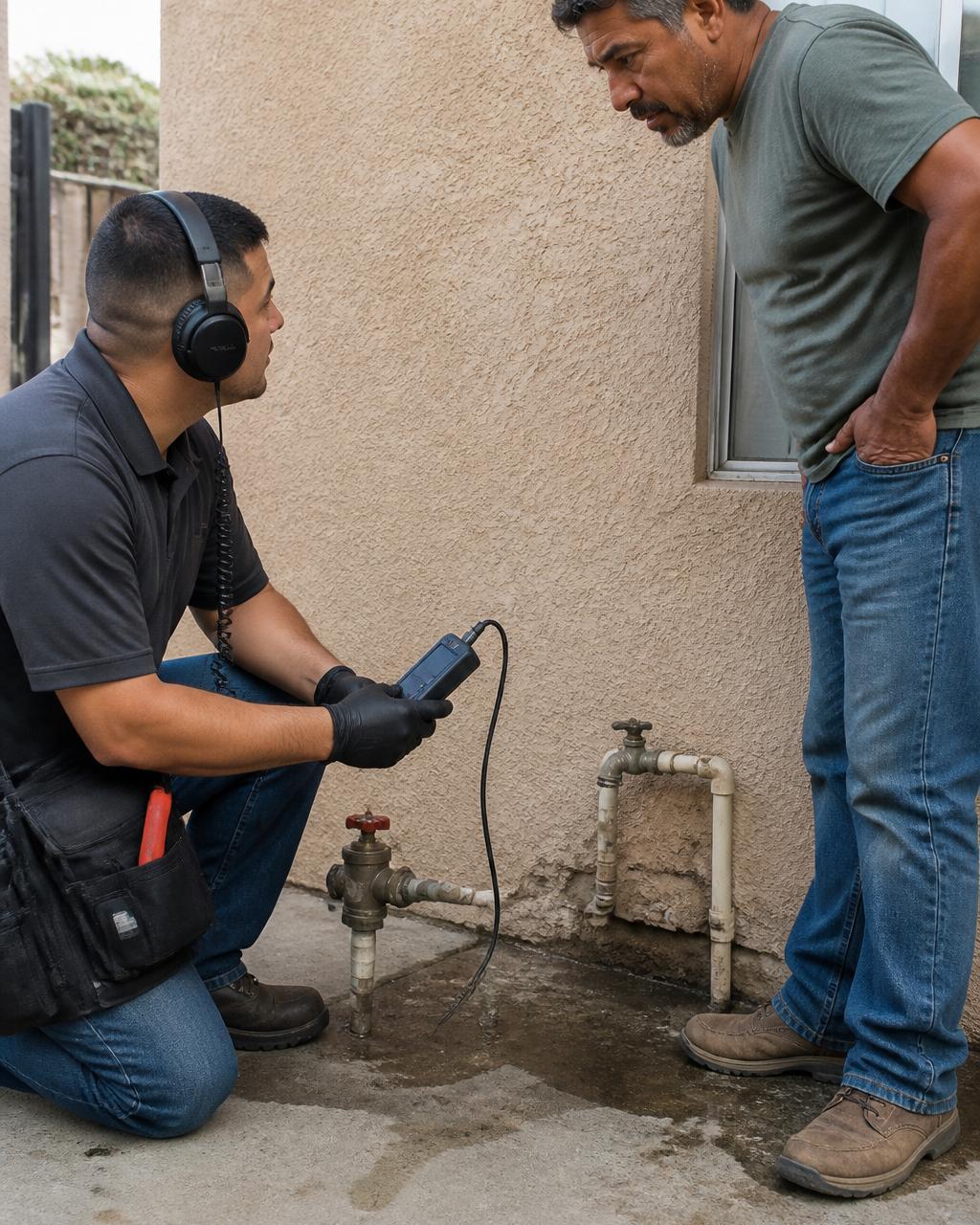
The water meter test you ran earlier is repeated and extended. The technician shuts off the supply to the house, then to individual zones, and watches the meter and pressure gauge at each stage. If the meter stops moving when the pool loop is valved off, the leak is on the pool side. If it keeps moving with the house isolated, the loss is on the supply line between the meter and the house.
Step 3: Acoustic Listening and Electronic Leak Detection
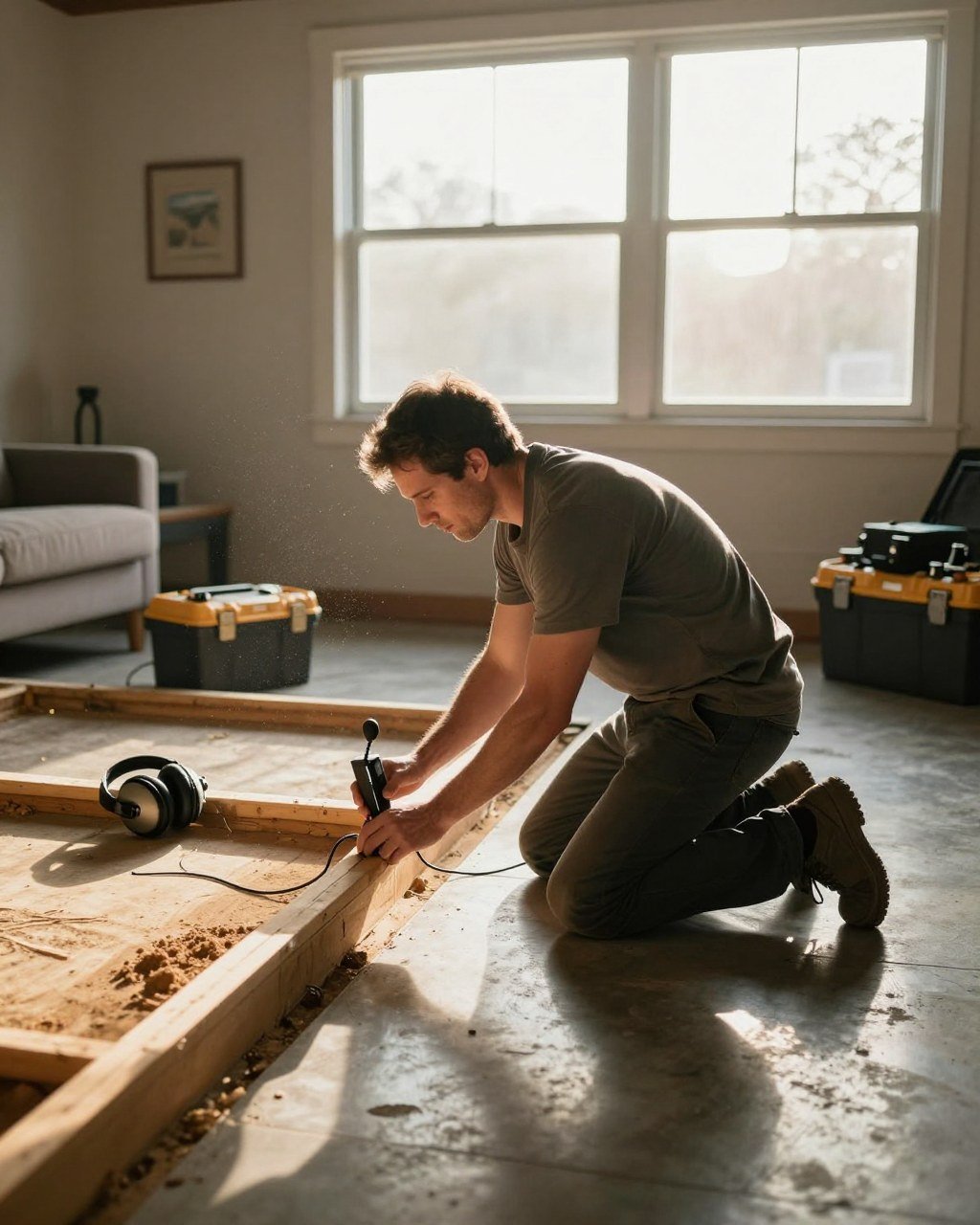
Acoustic listening uses a sensitive microphone pressed against the floor, wall, or pipe to pick up the sound of water escaping under pressure.
Acoustic sensor networks are also being tested at a neighborhood scale. An Illinois Sustainable Technology Center demonstration deployed sensors through a greater Chicago neighborhood to detect leaks in the network, though the published summary does not report measured accuracy.
Step 4: Pressure Testing and Dye Testing to Confirm the Line
Pressure testing isolates a section of pipe, charges it, and watches for pressure loss that proves a leak exists in that run. Dye testing works from the other direction: a tracer dye is introduced and its appearance elsewhere confirms the path. Together they turn a suspected location into a confirmed one, without confirmation, a technician is guessing at the loudest sound.
Step 5: Choosing the Right Method for the Leak Type
Not every leak responds to the same tool, and a good technician explains why they choose one method over another:
- Acoustic listening works best on pressurized supply leaks in metal or rigid plastic pipe and is the least disruptive first pass. It struggles with deep slab leaks and noisy environments.
- Thermal imaging is useful for hot-water slab leaks, because the warmed concrete shows as a temperature difference on camera. It is less useful on cold-water lines.
- Pressure isolation is the most reliable way to prove a leak exists in a specific run, but it does not pinpoint the spot on its own.
If the idea of opening a floor worries you, that concern is reasonable. Our guide on how to detect slab leaks without destruction explains the noninvasive methods in detail. The short version: we do not recommend breaking concrete until the evidence points to one specific spot.
Here is the order of operations a professional inspection follows, from the first interview to confirming the leak.
| Step | What happens | Purpose |
|---|---|---|
| Step 1 | Interview and system mapping | Identify systems to isolate first |
| Step 2 | Isolation testing | Narrow loss to supply, pool, or house |
| Step 3 | Acoustic listening and electronic detection | Hear escaping water and trace pipe path |
| Step 4 | Pressure testing and dye testing | Confirm the suspected location |
| Step 5 | Choosing the right method | Match tool to leak type |
What Drives the Cost of Water Leak Detection Services
Pricing for water leak detection depends on access, system complexity, and how many methods the diagnosis requires, so a responsible provider quotes after understanding the situation rather than over the phone. Pricing depends on the specifics of each property, so quotes are provided after the situation is reviewed. What we can do is explain which variables move a quote up or down, so you can read an estimate with a critical eye.
The factors that move the number:
- Leak location. A leak at a visible fixture or exposed pipe in the garage is quick to confirm. A leak under a slab, behind a tiled shower wall, or in the yard line between the meter and the house requires more isolation testing and more time. Location is usually the single largest driver of the total.
- Access. If the meter box is buried, the cleanout is under landscaping, or the water heater sits in a tight closet, the technician spends time clearing access before diagnosis begins. Ask whether access work is included or billed separately.
- How many systems must be isolated. A home with a pool loop, irrigation zones, a tankless water heater, and multiple hose bibs takes longer to isolate than a simple supply-and-drain layout.
A written scope prevents surprise line items. For a detailed breakdown of what affects the total on a slab diagnosis, read our slab leak detection cost guide.
Water Leak Insurance Documentation You Need Before Repairs Begin
Insurance documentation should be captured before a single repair is made, because adjusters evaluate the loss as it existed, not as it looked after the fix.
Gather this before work starts:
- Wide and close-up photos of every affected area
- Video of active water where it is visible
- Your water bills from before and after the spike
Policies vary, and coverage for finding a leak versus repairing resulting damage depends on the specific policy language. Read your own policy language or ask your adjuster which portion applies. Our team prepares clear reports, photos, and repair information for claims.
Stopping Water Damage and Verifying the Repair
Water damage prevention starts the moment a leak is confirmed, and the first move is shutting off the supply at the main valve if water is actively escaping.
After the repair, verify the fix rather than assuming it. Re-run the water meter test with everything off.
One thing worth saying plainly: a repaired leak is not the same as a monitored one.
Book a Residential Leak Inspection With California Leak Detection Specialists
If the meter test moved, or the floor is warm and the bill is climbing, guessing costs more than testing.
You are not obligated to use us for the repair after an inspection.
Call (951) 278-8999 to schedule, or visit our slab leak detection service in Corona page to see how the inspection works and what we document for you.
Frequently Asked Questions
How do you detect a water leak under a slab?
Pros start by isolating the system: shut every fixture, confirm the meter still moves, then pressure test the hot and cold lines separately to see which one loses pressure. From there they use acoustic listening and electronic amplification to narrow the location, and in some cases a dye test or camera to confirm. The goal is to mark a small, precise access point instead of opening the whole floor. Ask any provider how they confirm the spot before cutting.
Why is my water meter spinning when I can't see a leak?
A spinning meter with every fixture off means water is moving somewhere you cannot see: under the slab, inside a wall, in an irrigation line, or through a running toilet flapper. Run a water meter leak test by shutting the main valve and noting whether the dial stops. If it stops, the loss is on your side of the meter. If it keeps moving, call the water utility. Either way, that reading is the first piece of evidence a leak detection visit will use.
What should I do before a leak detection appointment?
Write down when you first noticed the problem, gather two or three water bills showing the increase, and clear access to the meter, water heater, and any crawlspace hatch. Note where you hear running water or feel warm flooring. Photograph any staining or bubbling paint before anyone touches it. If water is actively pooling, shut off the main valve first. Having this ready shortens the inspection and gives the technician a documented starting point for water leak insurance documentation.
How much should water leak detection cost?
Pricing depends on the specifics of the job; request a written quote from California Leak Detection Specialists. A single accessible fixture is a shorter visit than a whole-house isolation with pressure testing. Ask for the scope in writing: what is tested, how many access points are included, and whether the fee is credited toward the repair. Call (951) 278-8999 for a quote.
A hidden leak rarely announces itself. It shows up as a warm tile, a bill that does not add up, or a meter that keeps turning when the house is quiet. If any of that sounds familiar, get it confirmed with instruments instead of guesswork. California Leak Detection Specialists brings noninvasive detection, clear written reporting for your insurer, and repair work handled by the same licensed team that found the problem. Call (951) 278-8999 and get your leak located before it costs you a floor.